
EV Charger Keeps Tripping Breaker: 5-Step Fix Guide
You flip the breaker back on, plug in your EV, and ten minutes later — click. The breaker trips again. Now you are standing in the garage at 11 PM wondering if something is wrong with your charger, your wiring, or your electrical panel. This is one of the most frustrating EV ownership problems, and it is far more common than you might think.
The good news: in most cases, a tripping breaker has a straightforward cause that you can identify yourself. The fix might be as simple as removing a GFCI conflict, adjusting your charger's amperage, or tightening a loose wire connection. In this guide, we walk you through a systematic 5-step diagnosis that covers every common cause — from breaker sizing mistakes to weather-related trips — so you can get back to charging tonight instead of waiting a week for an electrician.
Preise, Verfügbarkeit und Programmbedingungen können sich ändern. Zuletzt geprüft: 17.04.2026. Alle Angaben ohne Gewähr.
Why EV Charger Breakers Trip
A circuit breaker is a safety device that cuts power when it detects a problem. Understanding which type of trip you are dealing with narrows the diagnosis immediately. There are three distinct mechanisms, and each points to a different root cause.
Overcurrent Trip (Thermal)
The breaker trips because too much current is flowing through the circuit. EV chargers draw sustained high current — a 40A charger on a 50A breaker runs at 80% of the breaker's rated capacity for hours at a time. This is by design (NEC 80% continuous load rule), but it leaves very little margin for error. If anything else on the circuit draws even a few extra amps — a garage light, a door opener, a space heater — the total exceeds the breaker's rating and it trips.
Key sign: The breaker trips after 10–30 minutes of charging (not immediately). The breaker handle feels warm to the touch. The trip happens more often on hot days when ambient heat reduces the breaker's effective capacity.
GFCI Trip (Ground Fault)
A GFCI breaker or the charger's built-in GFCI detects current leaking to ground — even a tiny 4–6 milliamp imbalance triggers an instant trip. This is the single most common type of EV charger breaker trip. Moisture, damaged cable insulation, and improper grounding are the usual suspects.
Key sign: The breaker trips instantly when charging starts (or within seconds). If you have a GFCI breaker, its test/reset button may be popped out. The charger may also show a red LED indicating a ground fault.
AFCI Trip (Arc Fault)
An AFCI (Arc Fault Circuit Interrupter) breaker detects electrical arcing — sparks caused by loose connections, damaged wires, or corroded terminals. Some newer homes have combination AFCI/GFCI breakers installed on garage circuits. While AFCI protection is excellent for preventing fires, EV chargers can cause nuisance AFCI trips because the high-frequency switching in the charger's electronics can mimic an arc signature.
Key sign: The AFCI breaker trips intermittently — sometimes the charger runs fine for hours, other times it trips within minutes. No moisture or heat correlation. The NEC does not currently require AFCI protection on EV charger circuits (NEC 210.12 exempts dedicated 240V circuits in garages), so replacing an AFCI breaker with a standard breaker is often the correct fix. Consult your local code authority.
Shared Circuit Overload
If your EV charger shares a circuit with other outlets or appliances, the combined load can exceed the breaker's capacity. This is a code violation — NEC Article 625.40 requires a dedicated branch circuit for EV charging equipment. But in practice, some homeowners or previous owners may have tapped into an existing circuit to save money. The result is intermittent trips that correlate with other appliance usage. For a full explanation of circuit requirements, see our dedicated circuit guide.
5-Step Diagnosis: Find the Cause in 15 Minutes
Work through these steps in order. Each one eliminates a category of causes, so by step 5 you will know exactly what is wrong — and whether you can fix it yourself or need an electrician.
Step 1: Identify the Breaker Type (2 Minutes)
Open your electrical panel and find the breaker for your EV charger circuit. Look at the breaker closely:
- Standard breaker: No test button. Just an ON/OFF handle. If this type trips, you have an overcurrent or short circuit issue.
- GFCI breaker: Has a TEST and RESET button on the face. If this type trips, you likely have a ground fault or a dual-GFCI conflict with your charger's built-in GFCI.
- AFCI breaker: Has a TEST button and is labeled "AFCI" or "Combination AFCI." If this type trips, nuisance tripping from the charger's electronics is the most likely cause.
- Dual-function (AFCI/GFCI) breaker: Has a TEST button and is labeled "Dual Function." This type is the most prone to nuisance trips with EV chargers.
Quick win: If you have a GFCI breaker and your charger has a built-in GFCI (all UL-listed EV chargers do), ask your electrician to swap it for a standard breaker. This eliminates the dual-GFCI conflict that causes the majority of nuisance trips. NEC Article 625.54 does not require a GFCI breaker when the EVSE has integral GFCI protection.
Step 2: Check the Breaker Size vs Charger Amperage (2 Minutes)
The NEC 80% continuous load rule requires your breaker to be rated at 125% of the charger's maximum amperage:
| Charger Amperage | Minimum Breaker Size | Minimum Wire Gauge |
|---|---|---|
| 16A | 20A | 12 AWG |
| 24A | 30A | 10 AWG |
| 32A | 40A | 8 AWG |
| 40A | 50A | 6 AWG |
| 48A | 60A | 6 AWG |
If your breaker is undersized — for example, a 40A charger on a 40A breaker instead of a 50A — thermal trips during sustained charging are inevitable. Fix: Have an electrician upsize the breaker (and verify the wire gauge supports it). Alternatively, reduce the charger's amperage setting if it has one. Many chargers (Grizzl-E, Wallbox, Emporia) let you dial down the amperage to match your circuit.
Step 3: Check for Shared Circuits (3 Minutes)
With the EV charger breaker ON but the charger not plugged in or not charging, check if anything else in the garage or house loses power when you flip that breaker OFF:
- Garage lights or outlets
- Exterior outlets
- A sub-panel or other breakers downstream
If anything else is on the same circuit, you do not have a dedicated circuit. Even a single garage light on a 50A EV charger circuit is technically a code violation and can contribute to nuisance trips. Fix: Have an electrician run a new dedicated circuit from your panel to the charger, or re-route the other devices to a different circuit. See our installation cost guide for typical pricing.
Step 4: Inspect Physical Connections (5 Minutes)
Turn off the breaker first. Then inspect the following:
- NEMA 14-50 outlet (plug-in chargers): Pull the plug out and look for discoloration, melting, or burn marks on the plug prongs or outlet face. Feel the outlet — if it was warm before you turned off the breaker, you have a loose connection generating heat. Check that the plug seats firmly without wobble.
- J1772 connector: Inspect the charging connector for moisture, dirt, corrosion on the pins, or physical damage. Moisture on the connector is the number one cause of GFCI trips.
- Charger cable: Run your hand along the entire cable length, feeling for cuts, bulges, or crushed spots. Even a tiny nick in the insulation can cause intermittent ground faults.
- Panel connections (if accessible): Loose lugs at the breaker are a common cause of arcing and tripping. If you see any discoloration on the wires or breaker, call an electrician immediately.
Step 5: Test With Reduced Amperage (3 Minutes)
If steps 1–4 have not revealed the cause, try reducing your charger's amperage setting:
- Grizzl-E Classic: Use the internal DIP switches to select a lower amperage (16A, 24A, or 32A instead of 40A)
- Wallbox Pulsar Plus: Reduce amperage in the myWallbox app
- Emporia Smart: Reduce amperage in the Emporia Energy app
- Lectron V-Box: Use the front-panel amperage adjustment
If the breaker stops tripping at a lower amperage, you have confirmed either an undersized breaker, undersized wiring, or a shared circuit that cannot handle the full load. If it still trips at the lowest setting, the problem is a ground fault or wiring issue — not an overcurrent issue.
Quick Diagnosis Summary
Trips instantly when charging starts? → GFCI conflict or ground fault (Steps 1, 4)
Trips after 10–30 minutes? → Overcurrent / thermal trip (Steps 2, 3, 5)
Trips intermittently / unpredictably? → AFCI nuisance trip or loose connection (Steps 1, 4)
Trips only in rain or humidity? → Moisture in connector or cable damage (Step 4)
Trips only on hot days? → Thermal derating of breaker + borderline sizing (Steps 2, 5)
Common Breaker Trip Causes by Brand
Each charger brand has its own quirks when it comes to breaker trips. Here are the most frequently reported causes and fixes for the most popular home EV chargers.
ChargePoint Home Flex
- Most common cause: Factory default amperage set higher than the circuit supports. The ChargePoint Home Flex defaults to 50A, which requires a 60A breaker and 6 AWG wiring. Many installations use 40A or 50A breakers.
- Fix: Use the ChargePoint app to reduce the amperage to match your circuit (32A for a 40A breaker, 40A for a 50A breaker).
- Known issue: Some early-production units had overly sensitive GFCI detection that tripped on humidity. A firmware update (version 1.4+) improved the threshold. Update via the app.
Wallbox Pulsar Plus
- Most common cause: Power Boost feature misreading CT clamp data, causing the charger to draw more current than the circuit can handle.
- Fix: Verify CT clamp installation direction (arrow must point toward the load). If Power Boost is not needed, disable it in the myWallbox app and set a fixed amperage.
- Known issue: Some Wallbox units trip AFCI breakers due to high-frequency switching noise. Wallbox recommends using a standard breaker (non-AFCI) on the dedicated EV circuit.
Lectron V-Box 48A
- Most common cause: Installed on a 50A circuit at full 48A draw. While technically within the 80% rule (48A × 1.25 = 60A breaker needed), some 50A breakers with marginal wiring will trip under sustained load.
- Fix: Either upgrade to a 60A breaker with appropriate wiring or reduce the Lectron's amperage setting to 40A.
- Advantage: The Lectron V-Box has built-in GFCI protection and no WiFi electronics, eliminating two of the most common trip causes (dual GFCI conflict and electronic noise).
Grizzl-E Classic
- Most common cause: DIP switch configuration set to 40A on a circuit with marginal wiring or a 40A breaker.
- Fix: Open the Grizzl-E's access panel and adjust the DIP switches to a lower amperage. The Grizzl-E supports 16A, 24A, 32A, and 40A settings. This is the easiest brand-specific fix — no app needed, just a screwdriver.
- Advantage: The Grizzl-E's adjustable amperage makes it the most flexible charger for troubleshooting breaker trips. Start at 16A and work up until you find the threshold.
Tesla Wall Connector
- Most common cause: Loose terminal connections inside the Wall Connector's junction box. The Tesla Wall Connector is hardwired, and thermal cycling over months can loosen the wire terminals.
- Fix: Turn off the breaker, open the wiring compartment, and verify all terminal screws are tight. Tesla specifies torque values in the installation manual — use a torque screwdriver if available.
- Known issue: Gen 2 Wall Connectors occasionally trip breakers due to an internal relay issue. Gen 3 units resolved this. If you have a Gen 2 with persistent trips, consider upgrading.
Emporia Smart Level 2
- Most common cause: The Emporia's energy management feature (with CT clamps) sometimes over-allocates power to the charger when other loads suddenly drop, causing a brief overcurrent spike that trips the breaker.
- Fix: Set a fixed maximum amperage in the app that is 5A below the breaker's continuous rating (e.g., 35A on a 50A breaker). This provides more headroom for load fluctuations.
When to Call an Electrician
Some breaker trip causes are safe to diagnose and fix yourself. Others require a licensed electrician. Here is the clear dividing line.
Safe to Fix Yourself
| Issue | DIY Fix | Time |
|---|---|---|
| GFCI breaker conflict | Ask electrician to swap to standard breaker (one-time fix) | 15 min |
| Charger amperage too high | Reduce amperage via app or DIP switches | 2 min |
| Moisture on J1772 connector | Wipe dry, store pins-down in holster | 1 min |
| Breaker not fully reset | Push firmly to OFF, then back to ON | 30 sec |
| AFCI nuisance trip | Request electrician to replace with standard breaker | 15 min |
Call an Electrician Immediately
| Warning Sign | What It Means | Danger Level |
|---|---|---|
| Breaker trips instantly every time | Short circuit in wiring, damaged insulation, or internal charger fault | High — fire risk |
| Burning smell near panel or outlet | Arcing connection, melting insulation | Critical — immediate fire risk |
| Outlet or plug discolored / melted | Loose connection causing sustained overheating | Critical — replace immediately |
| Breaker handle feels hot | Breaker is failing or circuit is overloaded | High — breaker replacement needed |
| Breaker trips with nothing plugged in | Short circuit in the wiring between panel and outlet | High — wiring fault |
| Multiple breakers trip simultaneously | Panel overload, loose main connections, or double-tapped breakers | High — panel inspection needed |
What to Tell the Electrician
When you call an electrician, give them these details to speed up the diagnosis:
- Breaker type (standard, GFCI, AFCI, or dual-function) and amperage
- Charger brand and model, and its configured amperage
- When it trips — immediately, after X minutes, only in certain weather, etc.
- Wire gauge and run length from panel to charger (if you know it)
- Any visible signs — heat, discoloration, smell, melting
A typical electrician service call for breaker trip diagnosis costs $75–$200. Common fixes range from $50 (breaker swap) to $500+ (new dedicated circuit). For a full cost breakdown, see our EV charger installation cost guide.
Prevention Tips: Stop Breaker Trips Before They Start
Once you have fixed the immediate problem, these preventive measures will keep your charger running reliably for years.
1. Right-Size Your Circuit From Day One
The cheapest fix is avoiding the problem entirely. When installing an EV charger circuit, always follow the 80% rule with margin:
- For a 40A charger: install a 50A breaker with 6 AWG wire (the minimum)
- For a 48A charger: install a 60A breaker with 6 AWG wire
- If the wire run exceeds 50 feet, consider upsizing wire by one gauge to compensate for voltage drop
Spending an extra $50–$100 on thicker wire during installation prevents years of headaches. See our electrical panel upgrade guide for planning details.
2. Use a Standard Breaker (Not GFCI or AFCI)
Since all UL-listed EV chargers have built-in GFCI protection, a standard breaker is sufficient and eliminates the most common source of nuisance trips. If your local code requires a GFCI breaker, talk to the inspector — NEC 625.54 recognizes that listed EVSE with integral GFCI does not need additional GFCI protection at the panel.
3. Keep the Connector Dry
Moisture causes more GFCI trips than any other single factor. Simple habits prevent this:
- Store the J1772 connector in its holster with pins facing down
- Use a weatherproof connector cover for outdoor installations
- Wipe the connector before plugging in after rain or high humidity
- Mount the charger under an overhang, awning, or garage entry if possible
4. Schedule Annual Connection Checks
Thermal cycling — the repeated heating and cooling during charge sessions — gradually loosens wire connections. Once a year, have an electrician (or do it yourself with the breaker OFF) check:
- Breaker terminal tightness
- Outlet or hardwired connection tightness
- Wire condition (look for discoloration, brittleness, or rodent damage)
- NEMA 14-50 outlet contact grip (plug should seat firmly, no wobble)
5. Choose a Charger With Adjustable Amperage
Chargers with adjustable amperage give you a built-in safety valve. If your circuit is borderline, you can dial down the charging speed to prevent trips without replacing any hardware. Both the Grizzl-E Classic and Lectron V-Box offer amperage adjustment — the Grizzl-E via DIP switches, the Lectron via front-panel controls.
6. Avoid Charging During Peak Load Times
If your home's electrical panel is near capacity, charging your EV while running the dryer, oven, or AC on a hot day can push the panel's main breaker or individual branch circuits past their limits. Use your vehicle's charge schedule to start charging at night (after 10 PM) when household loads are minimal. This also gets you cheaper electricity rates in many utility areas. For more on optimal charging times, see our best time to charge guide.
The 60-Second Breaker Trip Checklist
□ Breaker type: Standard (not GFCI/AFCI) — if not, swap it
□ Breaker sized at 125% of charger amperage
□ Dedicated circuit (nothing else on it)
□ Wire gauge appropriate for amperage and run length
□ All connections tight (panel, junction boxes, outlet)
□ Connector dry and stored properly
□ Charger amperage matches circuit capacity
Empfohlene Produkte
Als Amazon-Partner verdienen wir an qualifizierten Verkäufen — ohne Mehrkosten für Sie. Mehr erfahren
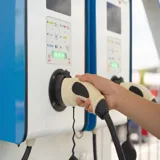
Lectron V-Box 48A
Lectron
Our top-rated budget Level 2 charger. Delivers 48A (11.5 kW) for the fastest home charging at this price. Built-in GFCI, NEMA 4 enclosure, and 24-foot cable. No WiFi — zero connectivity issues.
Grizzl-E Classic 40A
Grizzl-E
The most durable home EV charger on the market. NEMA 4X aluminum enclosure rated from -30°F to 122°F. Adjustable amperage (16/24/32/40A). Designed and tested in Canada for extreme weather reliability.
Verwandte Artikel & Tools
Häufig gestellte Fragen
Why does my EV charger keep tripping the breaker?
Should I use a GFCI breaker for my EV charger?
What size breaker do I need for a 40-amp EV charger?
Can I reduce my EV charger amperage to stop breaker trips?
Why does my EV charger only trip the breaker on hot days?
Is a tripping EV charger breaker dangerous?
Can a shared circuit cause my EV charger to trip the breaker?
How do I reset a tripped EV charger breaker?
CheapEVCharger Redaktion
Unabhängiges Redaktionsteam für E-Mobilität. Wir vergleichen Wallboxen anhand von Herstellerspezifikationen, verifizierten Amazon-Kundenbewertungen und aktuellen Preisdaten — ohne Einfluss von Herstellern.
Datenquellen: Produktspezifikationen von Herstellerwebseiten, Preise und Kundenbewertungen von Amazon.de und Amazon.com, Installationskosten aus Branchenberichten, Energiepreise von U.S. EIA und BDEW.
Gefällt Ihnen dieser Artikel?
Ehrliche Wallbox-Empfehlungen, E-Auto-Spartipps und die jährliche Erinnerung an Ihre THG-Prämie — direkt in Ihr Postfach.
Kein Spam. Jederzeit abmeldbar.