
Do You Need a Dedicated Circuit for an EV Charger? What the Code Says
You have picked out your EV charger, you have the perfect spot in the garage — and then your electrician mentions you might need a "dedicated circuit" or even a panel upgrade. Suddenly, your $300 charger project looks like it could cost $3,000.
Before you panic, let us walk through exactly what a dedicated circuit means, what the National Electrical Code (NEC) actually requires for EV charging, and how to figure out whether your existing electrical panel can handle a new charger without any upgrades. In many cases, the answer is simpler and cheaper than you think.
This guide covers the 2023 NEC requirements (which most jurisdictions have adopted or are in the process of adopting as of 2026), circuit sizing rules, wire gauge specifications, and practical advice for checking your own panel capacity.
Prices, availability, and program terms are subject to change. Last verified: March 15, 2026. We strive for accuracy but recommend verifying details before purchase.
What Is a Dedicated Circuit?
A dedicated circuit is an electrical circuit that serves only one appliance or device. It has its own circuit breaker in your electrical panel and its own wiring running directly to the device — nothing else is connected to it.
Dedicated vs Shared Circuits
Most outlets in your home are on shared circuits. A single 15-amp or 20-amp circuit might serve multiple outlets in a room — your living room lamps, TV, and phone charger might all share one circuit breaker. This works fine because none of these devices draws significant power individually, and they rarely all run at maximum load simultaneously.
Certain high-power appliances require their own dedicated circuits because they draw too much current to safely share. Common examples include:
- Electric dryer: 30-amp dedicated circuit
- Electric range/oven: 40 or 50-amp dedicated circuit
- Central air conditioner: 30 or 40-amp dedicated circuit
- Electric water heater: 30-amp dedicated circuit
- EV charger: 20 to 60-amp dedicated circuit (depending on charger amperage)
Why EV Chargers Need Dedicated Circuits
An EV charger is a continuous load — it draws power steadily for hours at a time, often pulling its maximum rated amperage for the entire charging session. This is fundamentally different from most household appliances, which cycle on and off (like a refrigerator) or run for short periods (like a microwave).
Continuous loads are harder on wiring and circuit breakers because they generate sustained heat over long periods. A wire that can safely handle 30 amps for a few minutes might overheat if it carries 30 amps continuously for 8 hours. This is why the NEC has specific, conservative rules for continuous loads — and why your EV charger needs its own circuit with properly sized wiring and breaker protection.
The short answer to the title question: yes, you need a dedicated circuit for any Level 2 EV charger. This is not optional — it is both a code requirement and a safety necessity. But the size of that circuit and how much it costs to install depend on your specific charger and your home's existing electrical capacity.
NEC Requirements for EV Charging
The National Electrical Code (NEC), published by the National Fire Protection Association (NFPA), is the foundation for electrical safety standards in the United States. Article 625 of the NEC specifically covers Electric Vehicle Power Transfer Systems, and several other articles apply to EV charger installations.
Key NEC Articles for EV Charging
Article 625 — Electric Vehicle Power Transfer Systems: This is the primary article governing EV charger installations. It covers equipment requirements, wiring methods, overcurrent protection, and disconnecting means for EVSE (Electric Vehicle Supply Equipment).
Article 210.21 — Outlet Devices (for plug-in chargers): If your EV charger plugs into an outlet (like a NEMA 14-50), this article requires that any single appliance connected to a branch circuit must not exceed 80% of the circuit's rating. This is the origin of the "80% rule" that determines breaker sizing.
Article 625.42 — Rating: EV charging equipment must have its branch circuit sized to the nameplate rating of the EVSE. For continuous loads (which EV charging always is), the circuit components must be rated at 125% of the maximum load.
The 80% Rule (NEC 210.21 and 625.42)
This is the most important concept for EV charger circuit sizing. The NEC requires that a continuous load (any load expected to run for 3 hours or more) must not exceed 80% of the circuit breaker's rated amperage. Stated the other way: the breaker must be rated at 125% of the continuous load.
In practical terms:
- A 32-amp charger needs a breaker rated at 32 x 1.25 = 40 amps
- A 40-amp charger needs a breaker rated at 40 x 1.25 = 50 amps
- A 48-amp charger needs a breaker rated at 48 x 1.25 = 60 amps
This rule exists because circuit breakers and wiring generate heat under load. At 80% of rated capacity, the heat generation is sustainable indefinitely. At 100%, it may be safe for short periods but can cause overheating and potential fire hazards during extended use.
2023 NEC Updates for EV Charging
The 2023 NEC introduced several important changes for EV charging:
- Article 625.44 — Energy Management System (EMS) allowance: The updated code now explicitly allows energy management systems to dynamically limit EV charger power draw. This means chargers with built-in load management (like the Wallbox Pulsar Plus with Power Boost or the Emporia Smart with load sharing) can be installed on circuits that would otherwise appear undersized — as long as the EMS guarantees the load stays within safe limits.
- Article 625.48 — Interactive EV charging: New provisions for bidirectional (V2H/V2G) charging equipment that can feed power back to the home or grid.
- Expanded EVSE disconnect requirements: The 2023 code has more specific requirements for how EVSE must be disconnectable for maintenance and emergency purposes.
Keep in mind that NEC adoption varies by jurisdiction. Some cities and states are still on the 2020 or even 2017 NEC. Always check with your local building department for the specific code version enforced in your area.
Circuit Size Guide
Choosing the right circuit breaker size and wire gauge is critical for both safety and performance. Here is a complete reference table for every common EV charger amperage, along with the corresponding breaker and wire requirements per the NEC.
| Charger Amperage | Charging Power (240V) | Required Breaker Size | Wire Gauge (Copper, NM-B) | Wire Gauge (Copper, THHN in Conduit) | Common Charger Examples |
|---|---|---|---|---|---|
| 16A | 3.8 kW | 20A | 12 AWG | 12 AWG | Basic Level 2, ChargePoint Flex (min setting) |
| 24A | 5.8 kW | 30A | 10 AWG | 10 AWG | Emporia Smart (24A mode), some portable units |
| 32A | 7.7 kW | 40A | 8 AWG | 8 AWG | Tesla Mobile Connector, most NEMA 14-50 plug-in chargers |
| 40A | 9.6 kW | 50A | 6 AWG | 8 AWG | Grizzl-E Classic, BougeRV Level 2, many mid-range units |
| 48A | 11.5 kW | 60A | 6 AWG | 6 AWG | Tesla Wall Connector, Lectron V-Box, Wallbox Pulsar Plus |
| 50A | 12.0 kW | 60A (minimum) | 6 AWG | 6 AWG | ChargePoint Home Flex (max setting) |
Understanding Wire Gauge Selection
Wire gauge (AWG) determines how much current a wire can safely carry without overheating. Lower AWG numbers indicate thicker wire with higher current capacity. The required gauge depends on:
- Amperage: Higher amps require thicker wire (as shown in the table above)
- Distance: Longer wire runs require thicker wire to compensate for voltage drop. For runs over 50 feet, consider going up one wire size (e.g., 6 AWG instead of 8 AWG for a 40A circuit)
- Wiring method: Wire in conduit (THHN) can carry more current than wire in cable (NM-B/Romex) because conduit dissipates heat more effectively
- Ambient temperature: In hot environments (e.g., running through an attic in summer), wire ampacity is derated, potentially requiring a thicker gauge
Plug-In vs Hardwired: Circuit Implications
EV chargers come in two installation types, and the NEC treats them slightly differently:
Plug-in chargers (using NEMA 14-50, 14-30, or 6-50 outlets) are limited by the outlet's rating. A NEMA 14-50 outlet is rated for 50 amps, but the 80% continuous-load rule means you can only draw 40 amps continuously. This is why most plug-in chargers max out at 40 amps (like the Grizzl-E Classic) or 32 amps (like the Tesla Mobile Connector).
Hardwired chargers are permanently connected to the circuit without a plug. This allows them to be installed on any appropriately sized circuit, including 60-amp circuits for 48-amp chargers. Hardwired installation is required for any charger drawing more than 40 amps continuously.
Budget chargers like the Emporia Smart ($159) and BougeRV Level 2 ($279) offer both plug-in and hardwired options, giving you flexibility to match your existing electrical setup.
Can You Share a Circuit with Other Appliances?
The short answer is no — and here is why this is both a code requirement and a critical safety issue.
The NEC Prohibition
NEC Article 625.42 requires that EVSE (Electric Vehicle Supply Equipment) be supplied by a dedicated branch circuit. This means no other outlets, lights, or appliances can be connected to the same circuit as your EV charger. This is not a suggestion or best practice — it is a code requirement in virtually every jurisdiction in the United States.
The only exception is when an approved Energy Management System (EMS) is used to coordinate loads, as permitted under the 2023 NEC. But even in this case, the EMS must guarantee that the combined load never exceeds the circuit's safe capacity.
Why Sharing Is Dangerous
Even if it were code-compliant (which it is not), sharing a circuit with an EV charger would be dangerous for several reasons:
1. Sustained overload risk. An EV charger is a continuous load that may draw its maximum amperage for 6–10 hours straight. If another appliance on the same circuit kicks on — even briefly — the combined load could exceed the circuit breaker's rating. While the breaker should trip, repeated overloads degrade the breaker over time, potentially leading to a breaker that fails to trip when it should.
2. Wire heating. Wiring is sized for the expected maximum load of the circuit. If a circuit was sized for a 32-amp EV charger but is also serving a 5-amp shop light and an occasional 10-amp power tool, the wire could be carrying more current than it was designed for during those overlap periods. This causes the wire to heat up, which can degrade insulation and, in worst cases, start a fire inside the wall.
3. Nuisance tripping. If you share a circuit and the combined load occasionally exceeds the breaker rating, you will experience nuisance trips — the breaker shuts off, your car stops charging, and you may not realize it until morning when your car is not charged. This is frustrating at best and could leave you stranded at worst.
4. Insurance and liability. If an electrical fire occurs and the investigation reveals that your EV charger was not on a dedicated circuit as required by code, your homeowner's insurance may deny the claim. Electrical code violations can void insurance coverage, leaving you personally liable for all damages.
What About the Dryer Outlet Trick?
Some EV owners are tempted to unplug their electric dryer and plug in their EV charger, sharing the same outlet (not simultaneously). While this technically uses a dedicated circuit (the dryer circuit), there are concerns:
- The outlet may be a NEMA 10-30 (older, 3-prong) which lacks a ground wire — a safety hazard
- Frequent plug/unplug cycles can loosen the outlet connections over time
- You might forget and run both at once if someone else in the household does laundry
A better solution: install a dryer buddy or NEMA 14-50 splitter with interlock — a device that lets two 240V appliances share one circuit but physically prevents both from running simultaneously. These cost $100–$300 and provide a code-compliant way to share an existing circuit. But for a permanent solution, a dedicated circuit is always the right answer.
Panel Capacity: Do You Need an Upgrade?
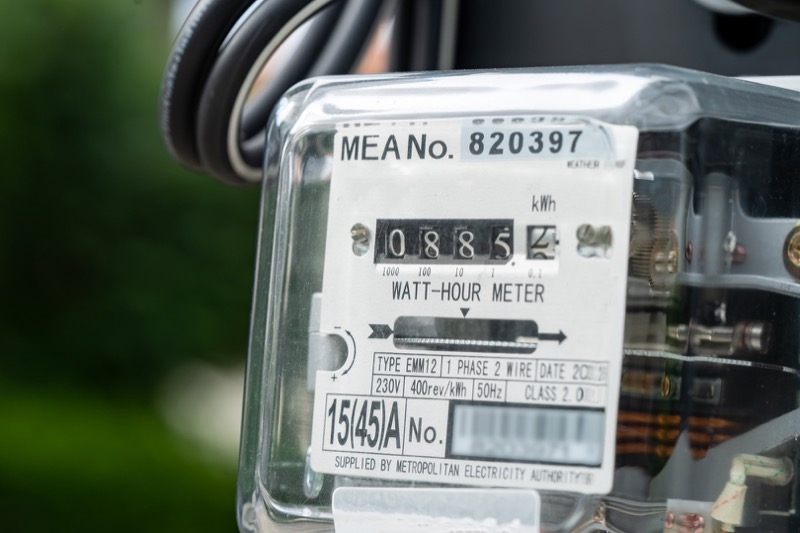
One of the biggest cost concerns for EV charger installation is whether your home's electrical panel has enough capacity for a new dedicated circuit. A panel upgrade can cost $2,000–$5,000, so it is important to understand when it is truly necessary and when you can avoid it.
Common Residential Panel Sizes
- 100-amp panel: Standard in older homes (pre-1990s). Often tight on capacity, especially with central AC, electric water heater, or electric dryer. Adding a 40–60 amp EV charger circuit frequently requires a panel upgrade or creative load management.
- 150-amp panel: Less common but found in some 1990s–2000s homes. Usually has enough headroom for a 40-amp EV circuit but may be tight for a 60-amp circuit.
- 200-amp panel: Standard in most homes built after 2000. Generally has sufficient capacity for a 60-amp EV charger circuit without any upgrades, unless the home already has heavy electrical loads (multiple AC units, electric heating, hot tub, pool pump, etc.).
- 320–400-amp panel: Found in large or all-electric homes. Plenty of capacity for one or multiple EV chargers.
When You Can Avoid a Panel Upgrade
You may be able to install an EV charger without upgrading your panel if:
- You choose a lower-amperage charger: A 24-amp charger (30A breaker) requires much less panel capacity than a 48-amp charger (60A breaker). For many daily drivers, a 24–32 amp charger provides plenty of overnight charging power. See our best EV charger under $300 list for affordable lower-amp options.
- You use a smart charger with load management: Chargers like the Emporia Smart and Wallbox Pulsar Plus can dynamically reduce their power draw when other household loads are high. Under the 2023 NEC, this can allow installation on panels that would otherwise be at capacity.
- You retire an existing circuit: If you have a 240V circuit serving an appliance you no longer use (old hot tub, workshop welder, second oven), your electrician can repurpose that circuit for the EV charger.
- Your electrician performs a load calculation (NEC Article 220) and determines that your actual peak demand is well below your panel's rated capacity — even with the EV charger added.
When a Panel Upgrade Is Necessary
You will likely need a panel upgrade if:
- You have a 100-amp panel with central AC and an electric dryer/water heater — there is simply not enough capacity for a 40–60 amp EV circuit
- Your panel has no available breaker slots (though a tandem breaker or sub-panel can sometimes solve this without a full upgrade)
- Your panel is outdated or uses recalled breakers (Federal Pacific, Zinsco/Sylvania, or certain Challenger panels are known safety hazards and should be replaced regardless of EV charging needs)
- Your utility's service entrance (the wire from the street to your meter) is undersized — even a new panel cannot draw more power than the service entrance can supply
Cost-Saving Alternative: Sub-Panel
If your main panel is full but your service entrance has capacity, an electrician can install a sub-panel near the charging location for $500–$1,500 — significantly less than a full panel upgrade. The sub-panel is fed from the main panel and provides dedicated breaker slots for the EV charger and potentially other garage circuits.
How to Check Your Electrical Panel Capacity
Before calling an electrician, you can do a preliminary assessment of your panel capacity yourself. This will not replace a professional load calculation, but it will give you a reasonable idea of whether a panel upgrade is likely.
Step 1: Find Your Panel's Main Breaker Rating
Open your electrical panel (the metal box, usually in the garage, basement, or utility room). At the top, you will see a large breaker — this is the main breaker. It will be labeled with its amperage: 100, 150, 200, etc. This is your panel's maximum capacity.
Important safety note: You do not need to touch anything inside the panel for this step. Just read the number on the main breaker. If you are uncomfortable opening the panel, that is completely fine — an electrician can assess everything during the installation quote.
Step 2: Add Up Your Existing Circuit Breakers
List every breaker in your panel and its amperage. This will not give you your actual load (most circuits never draw their full rated amperage), but it gives a rough upper bound. Common residential circuits include:
- Lighting and outlets: 15A or 20A each (typically 6–12 circuits)
- Kitchen countertop outlets: 20A (usually 2 dedicated circuits)
- Bathroom outlets: 20A
- Laundry: 20A
- Electric dryer: 30A (240V, double-pole breaker)
- Electric range: 40A or 50A (240V, double-pole breaker)
- Central AC: 30A or 40A (240V, double-pole breaker)
- Electric water heater: 30A (240V, double-pole breaker)
- Furnace: 15A or 20A
Step 3: Estimate Your Peak Load
Your actual peak electrical demand is almost always much less than the sum of all breakers. The NEC uses a standard calculation method (Article 220) that applies demand factors — essentially, it recognizes that not all circuits are at full load simultaneously.
A simplified estimate:
- Add up the nameplate watts of your largest 240V appliances (AC, dryer, range, water heater)
- Add 3,000 watts for general lighting and outlets (first 3,000 watts at 100%)
- Add remaining general loads at 35% (NEC demand factor)
- Add the EV charger at 100% (continuous loads are not reduced)
- Divide the total watts by 240V to get your estimated peak amperage
If the result is under your main breaker's rating, you likely have capacity. If it is close or over, a professional load calculation is needed.
Step 4: Check for Available Breaker Slots
Count the empty slots in your panel. A 48-amp EV charger needs a 60-amp double-pole breaker, which takes up 2 slots. If you have no empty slots, you may need a sub-panel or tandem breakers (which allow two circuits in one slot for compatible panels).
Step 5: Get a Professional Quote
Armed with this information, contact 2–3 licensed electricians for quotes. A good electrician will:
- Perform a formal NEC Article 220 load calculation
- Inspect your panel for safety issues (recalled breakers, corrosion, loose connections)
- Recommend the most cost-effective approach (direct circuit, sub-panel, or panel upgrade)
- Handle the building permit and inspection (required in most jurisdictions for new 240V circuits)
Total installation cost for a dedicated EV charger circuit typically ranges from $200–$800 if no panel work is needed, or $2,500–$5,000 if a panel upgrade is required.
For more information on home electrical requirements, the U.S. Department of Energy maintains a helpful overview of EV charging infrastructure and home preparation. And to understand how different charger amperages affect your daily charging time, use our EV Charging Time Calculator.
Once you know your panel capacity, choosing the right charger becomes much easier. Our best cheap Level 2 EV chargers guide covers options at every amperage level, from budget-friendly 16-amp units to full-speed 48-amp chargers.
Recommended Products
As an Amazon Associate, we earn from qualifying purchases at no extra cost to you. Learn more
AIMILER Level 2 EV Charger 32A
The most affordable WiFi-enabled Level 2 charger with app scheduling — ideal for homes with limited panel capacity.
Lectron Portable Level 2 Charger
A reliable portable charger with adjustable amperage. Great for renters or anyone who needs flexible installation options.
Related Articles & Tools
Frequently Asked Questions
Is a dedicated circuit legally required for an EV charger?
What size breaker do I need for a Level 2 EV charger?
Can I plug my EV charger into a dryer outlet?
How much does it cost to add a dedicated circuit for an EV charger?
Do I need to upgrade my electrical panel for an EV charger?
What wire gauge do I need for my EV charger circuit?
Can I share a dryer circuit with my EV charger?
What is a load calculation and do I need one?
CheapEVCharger Editorial Team
Independent EV charging editorial team. We compare home chargers based on manufacturer specifications, verified Amazon customer reviews, and real-time pricing data — never influenced by manufacturers.
Data sources: Product specifications from manufacturer websites, pricing and customer reviews from Amazon.com and Amazon.de, installation costs from industry reports, electricity rates from U.S. EIA and DOE.
Enjoyed this article?
Practical EV home-charging tips, honest charger picks, and NACS-transition updates — straight to your inbox.
No spam. Unsubscribe anytime.