
Best Time to Charge Your Electric Car
When you charge your electric car matters almost as much as where you charge it. By shifting your charging sessions to off-peak hours, you can slash your electricity costs by 30–50% without changing anything about your driving habits.
The secret lies in time-of-use (TOU) electricity rates, which most major utilities now offer. These plans charge less for electricity during low-demand periods—typically late night through early morning—exactly when your car would be sitting in the garage anyway. In this guide, we cover exactly when to charge, how TOU rates work, which utilities offer the best off-peak deals, and how smart chargers automate the entire process.
Prices, availability, and program terms are subject to change. Last verified: March 18, 2026. We strive for accuracy but recommend verifying details before purchase.
Why Charging Time Matters for Your Wallet
Electricity is not a flat-rate commodity. The price your utility charges per kilowatt-hour fluctuates throughout the day based on overall grid demand. During peak hours (typically late afternoon through early evening), everyone is running their air conditioning, cooking dinner, and watching TV. The grid is under maximum stress, and utilities respond by charging premium rates.
During off-peak hours (typically late night through early morning), demand drops dramatically. Power plants are still running, wind turbines are still spinning, and all that capacity has nowhere to go. Utilities incentivize nighttime consumption with deeply discounted rates, sometimes 50–70% cheaper than peak rates.
The Real Dollar Impact
Let us put real numbers to this. Assume you drive the national average of 13,500 miles per year in an EV that gets 3.5 miles per kWh. You need about 4,286 kWh per year for charging (accounting for 90% charging efficiency). Here is what that costs at different rates:
| Rate Scenario | Rate ($/kWh) | Annual Charging Cost | Monthly Cost |
|---|---|---|---|
| Flat rate (national avg) | $0.16 | $686 | $57 |
| Peak TOU rate | $0.25–$0.45 | $1,072–$1,929 | $89–$161 |
| Off-peak TOU rate | $0.06–$0.12 | $257–$514 | $21–$43 |
| Super off-peak TOU | $0.04–$0.08 | $171–$343 | $14–$29 |
The difference between charging during peak hours and super off-peak hours can be $800–$1,500 per year. That is not a rounding error—it is a significant financial impact, roughly equivalent to the cost of the charger itself.
It Is Also Better for the Grid and the Environment
Charging during off-peak hours is not just good for your wallet; it is better for the electrical grid and the environment. Here is why:
- Grid stability: By shifting EV charging to nighttime, you help balance grid demand, reducing the need for expensive "peaker" power plants that only run during high-demand periods.
- Cleaner energy: In many regions, the nighttime grid mix includes a higher percentage of wind power (wind tends to blow more at night) and baseload nuclear power. Daytime peak periods often rely more heavily on natural gas peaker plants.
- Infrastructure savings: When everyone charges during off-peak hours, it reduces the need for costly grid upgrades to handle peak demand—savings that can eventually be passed on to ratepayers.
Many utilities actively encourage off-peak EV charging through special rate plans, rebates on smart chargers, and demand-response programs. It is a genuine win-win-win for your wallet, the grid, and the planet.
Understanding Time-of-Use (TOU) Rates
Time-of-use (TOU) rate plans divide the day into two or three pricing tiers based on electricity demand. Understanding how these tiers work is essential for maximizing your savings.
How TOU Plans Are Structured
Most TOU plans have three pricing periods:
- Peak: The most expensive hours, typically 4 PM to 9 PM on weekdays. This is when residential demand is highest (people returning home from work, cooking, running HVAC). Rates are often 2–4x the off-peak rate.
- Mid-peak (or shoulder): Moderate pricing during daytime hours, typically 7 AM to 4 PM and sometimes 9 PM to 11 PM. Not all utilities have a mid-peak tier.
- Off-peak: The cheapest hours, typically 11 PM to 7 AM (some start as early as 9 PM). Weekend and holiday rates are often off-peak all day.
- Super off-peak: Some utilities offer an even cheaper tier during the lowest-demand hours (midnight to 6 AM). This is the sweet spot for EV charging.
TOU vs Flat-Rate: Which Is Better for EV Owners?
If you can shift 80%+ of your electricity consumption (not just EV charging) away from peak hours, a TOU plan almost always saves money. But there are important caveats:
| Factor | TOU Plan Wins If... | Flat Rate Wins If... |
|---|---|---|
| EV charging | You charge at night (almost everyone) | You must charge during the day |
| AC/Heating | You can pre-cool/heat before peak hours | You run HVAC heavily 4–9 PM |
| Cooking/Laundry | You shift to evenings/weekends | You cook/do laundry 4–9 PM daily |
| Work from home | Your daytime usage is moderate | You run heavy equipment all day |
| Solar panels | You export during peak, use off-peak | You use most solar production yourself |
For most EV owners who charge at night, switching to TOU saves $200–$600 per year on EV charging alone. The savings on the rest of your bill depend on your ability to shift other usage.
EV-Specific Rate Plans
Many utilities now offer rate plans designed specifically for EV owners. These come in two flavors:
Whole-Home EV TOU Plans
Your entire home switches to TOU pricing, with the EV charging benefit being the deeply discounted off-peak rate. Examples include:
- SCE TOU-D-PRIME: Off-peak rate of $0.12/kWh vs peak rate of $0.42/kWh
- PG&E EV2-A: Off-peak rate of $0.24/kWh vs peak rate of $0.53/kWh
- Duke Energy EV Complete: Off-peak rate of $0.06/kWh
Separate EV Meter Plans
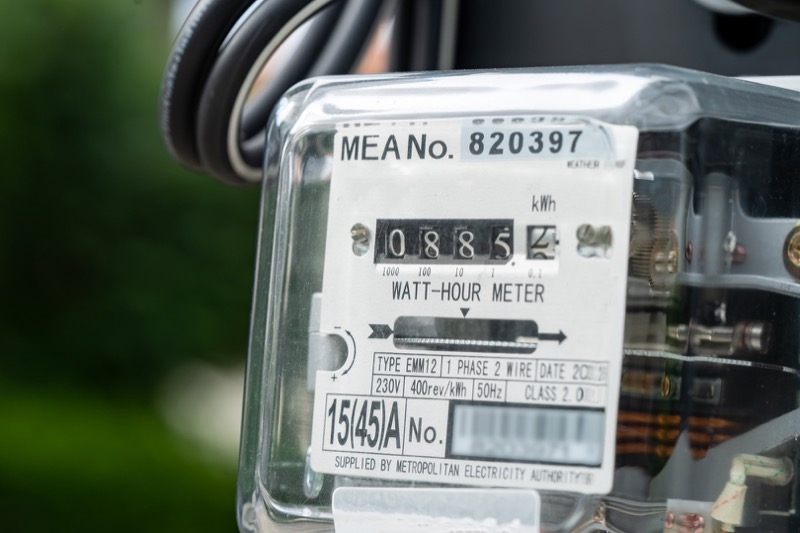
Some utilities allow you to install a second electric meter dedicated to your EV charger. This meter gets a special EV rate (often $0.04–$0.08/kWh flat), while your home stays on its regular plan. The downside is the cost of installing the second meter ($200–$500), but for high-mileage drivers, it pays for itself quickly.
- PG&E EV-B: Separate meter, flat rate of approximately $0.06/kWh off-peak
- Austin Energy EV360: Separate meter with discounted EV rate
- Georgia Power Plug-In EV: Separate meter at $0.05/kWh off-peak
How to Switch to a TOU Plan
Switching is usually free and can be done online or by calling your utility:
- Check your utility's website for available rate plans. Search for "time of use" or "EV rate plan."
- Compare plans using your past 12 months of usage data (available on your utility account). Many utilities have online tools that project your costs under different plans.
- Enroll online or call customer service. The switch typically takes one billing cycle.
- Set your charger schedule to charge during off-peak hours. This is critical—charging during peak hours on a TOU plan is more expensive than a flat rate.
Use our EV charging cost calculator to model different rate scenarios for your specific situation.
Off-Peak Hours by Major Utility
Every utility defines its own peak and off-peak windows. Here are the off-peak hours and approximate rates for major U.S. utilities as of 2026. Use this table to determine the best charging window for your location.
| Utility | State | Off-Peak Hours | Off-Peak Rate | Peak Rate | EV Plan Available |
|---|---|---|---|---|---|
| PG&E (EV2-A) | CA | 12 AM – 3 PM | $0.24/kWh | $0.53/kWh | Yes |
| SCE (TOU-D-PRIME) | CA | 8 PM – 8 AM | $0.12/kWh | $0.42/kWh | Yes |
| SDG&E (EV-TOU-5) | CA | 12 AM – 6 AM | $0.10/kWh | $0.65/kWh | Yes |
| Con Edison | NY | 12 AM – 8 AM | $0.05/kWh | $0.30/kWh | Yes |
| ComEd | IL | 10 PM – 6 AM | $0.03–$0.06/kWh | $0.14–$0.25/kWh | Hourly pricing |
| Duke Energy | NC/SC | 9 PM – 6 AM | $0.06/kWh | $0.21/kWh | Yes |
| Georgia Power | GA | 11 PM – 7 AM | $0.05/kWh | $0.20/kWh | Yes (separate meter) |
| Florida Power & Light | FL | 10 PM – 6 AM | $0.05/kWh | $0.17/kWh | Yes |
| APS | AZ | 10 PM – 5 AM | $0.06/kWh | $0.24/kWh | Yes |
| Xcel Energy | CO/MN | 9 PM – 9 AM | $0.07/kWh | $0.17/kWh | Yes |
| Dominion Energy | VA | 11 PM – 5 AM | $0.05/kWh | $0.18/kWh | Yes |
| CPS Energy | TX | 10 PM – 6 AM | $0.06/kWh | $0.15/kWh | EV rate plan |
| Austin Energy | TX | 10 PM – 6 AM | $0.04/kWh | $0.14/kWh | Yes (EV360) |
| LADWP | CA | 10 PM – 8 AM | $0.10/kWh | $0.27/kWh | Yes |
| National Grid | MA/NY | 8 PM – 8 AM | $0.14/kWh | $0.30/kWh | Yes |
| Eversource | CT/MA | 8 PM – 8 AM | $0.15/kWh | $0.35/kWh | Limited |
How to Read This Table
The off-peak hours column shows when you should be charging. Set your charger's schedule to start at the beginning of the off-peak window and finish before peak hours begin. For example, if your utility's off-peak window is 10 PM to 6 AM, schedule your charger to start at 10 PM.
Most Level 2 chargers at 32 amps will add about 25 miles of range per hour. In an 8-hour off-peak window (10 PM to 6 AM), that is 200 miles of range—more than enough for most daily needs. Even if you drive 60+ miles per day, an overnight charge will fully replenish your battery.
The Biggest Savings Opportunities
Several utilities stand out for exceptional EV savings:
- Austin Energy EV360: At $0.04/kWh off-peak, this is one of the cheapest EV rates in the country. Annual charging cost: approximately $171 for the average driver.
- ComEd (Illinois) hourly pricing: ComEd offers real-time hourly pricing that can drop to $0.02–$0.03/kWh during nighttime hours. Smart chargers that respond to real-time pricing can maximize these savings.
- Georgia Power separate meter: At $0.05/kWh off-peak on a dedicated EV meter, Georgia residents can charge for about $214/year.
- Con Edison (New York): Despite New York's generally expensive electricity, Con Edison's off-peak EV rate of $0.05/kWh is remarkably competitive.
Important note: Rates change. Always verify current rates on your utility's website before switching plans. The rates listed here are approximate and based on early 2026 data.
How Smart Chargers Help You Save
A smart EV charger is one of the most effective tools for minimizing your charging costs. While you can manually start and stop charging, a smart charger automates the process, ensuring you never accidentally charge during expensive peak hours.
Key Smart Charger Features for Savings
1. Scheduled Charging
The most essential feature. Scheduled charging lets you plug in whenever you arrive home, but charging does not begin until the off-peak window. You set the schedule once in the charger's app, and it runs automatically every night.
This is superior to using your car's built-in charge scheduler for several reasons:
- The charger schedule works regardless of which EV you plug in (great for households with multiple EVs).
- Charger schedules are typically more reliable than car software, which can reset after OTA updates.
- Some chargers allow multiple schedules (e.g., different times on weekdays vs weekends).
2. Energy Monitoring
Smart chargers track exactly how much energy each charging session uses and the associated cost. This data helps you:
- Verify that you are actually charging during off-peak hours
- Track monthly and annual charging costs
- Compare your actual costs against estimates
- Identify anomalies (e.g., a schedule that shifted after a time change)
3. Amperage Adjustment
Many smart chargers let you adjust the charging amperage via the app. Why would you want to charge slower? Two reasons:
- To fit within your off-peak window: If your off-peak window is short (e.g., 6 hours) and your charger would finish in 4 hours at max amperage, reducing the amperage spreads the load more evenly, which is better for battery health.
- Load management: If you have limited panel capacity, reducing the charger amperage during hours when other heavy appliances are running prevents breaker trips. Some chargers do this automatically based on whole-home energy monitoring.
4. Demand Response and Utility Integration
Some smart chargers integrate with utility demand-response programs. When the grid is under stress, the utility can temporarily reduce your charger's output or pause charging. In exchange, you receive bill credits or incentive payments. Programs include:
- Con Edison SmartCharge New York: Earn up to $150/year for allowing off-peak charging optimization.
- PG&E EV Charge Network: Rebates for enrolling smart chargers in demand-response programs.
- Various ChargePoint/Enel X programs: Automated demand response with bill credits.
5. Solar Integration
For homeowners with solar panels, some smart chargers can coordinate with your solar production. They charge at maximum rate when solar production is high (excess energy) and reduce or pause when production drops. This maximizes your solar self-consumption and minimizes grid electricity usage.
Smart Charger vs Dumb Charger: The Cost Difference
Smart chargers typically cost $50–$150 more than basic "dumb" chargers. But the savings they enable through scheduling and energy optimization easily justify the premium:
| Scenario | Basic Charger (flat rate) | Smart Charger (TOU off-peak) | Annual Savings |
|---|---|---|---|
| National average rates | $686/year | $386/year | $300 |
| California (SCE) | $1,162/year | $514/year | $648 |
| New York (Con Ed) | $875/year | $214/year | $661 |
| Texas (Austin Energy) | $570/year | $171/year | $399 |
In every scenario, the smart charger pays for the price premium in the first 2–6 months. After that, it is pure savings, year after year. Browse our best cheap Level 2 EV chargers for smart chargers starting under $250.
Should You Charge Every Night?
This is one of the most common questions new EV owners have, and the answer is more nuanced than a simple yes or no. It depends on your battery chemistry, daily driving distance, and personal preferences.
The Short Answer
You do not need to charge every night, but it is perfectly fine to do so as long as you set your charge limit to 80% for daily use. Modern EV batteries are designed to handle daily charging cycles without significant degradation.
Battery Health Considerations
EV batteries degrade over time based on several factors:
- State of charge (SoC): Keeping the battery between 20% and 80% minimizes stress on the cells. Regularly charging to 100% or depleting to near 0% accelerates degradation.
- Temperature: Extreme heat is the enemy of battery longevity. Charging in a hot garage during a summer afternoon is worse for the battery than charging overnight when temperatures are cooler.
- Charge speed: Slower Level 2 home charging is gentler on the battery than frequent DC fast charging. This is another advantage of home charging.
- Number of cycles: While more cycles do mean more wear, modern lithium-ion batteries are rated for 1,500–3,000+ cycles. Even charging daily, that is 4–8+ years before noticeable degradation.
Charging Strategies by Driver Type
Here is our recommended approach based on your daily driving pattern:
Low-Mileage Driver (Under 30 Miles/Day)
If you drive less than 30 miles daily, you are using less than 10% of most EV batteries each day. You do not need to charge every night. Consider charging every 2–3 days, or simply plug in when you drop below 40–50%. This minimizes charge cycles while keeping a comfortable buffer.
With a Level 2 charger, even a single overnight session will add 150–200 miles of range—enough for a full week of this type of driving. If you only have Level 1 charging, nightly charging may make more sense since it only adds 30–40 miles overnight. Learn more about the differences in our Level 1 vs Level 2 charging guide.
Average Driver (30–60 Miles/Day)
For the typical American commute, charging every night to 80% is the simplest and most practical approach. You plug in when you get home, the smart charger starts during off-peak hours, and you wake up with a full battery every morning. The consistency is convenient and the battery impact is negligible.
If you prefer not to plug in daily, charging every other day works fine too. You will use about 15–35% of your battery daily, so charging every other day keeps you in the ideal 20–80% range.
High-Mileage Driver (60+ Miles/Day)
If you drive 60+ miles daily (rideshare drivers, long commuters, salespeople), nightly charging is recommended. Set your charge limit to 80% for daily use, but charge to 90–100% before known long days or road trips. A Level 2 charger is essentially mandatory for this usage pattern—Level 1 simply cannot keep up.
The "Just Plug It In" Approach
Many experienced EV owners adopt the simplest possible strategy: plug in every time you park at home, with the charge limit set to 80% and a smart charger handling the off-peak scheduling. This approach:
- Ensures you always have a nearly full battery for unexpected trips
- Requires zero thought or planning
- Keeps the battery in a healthy state of charge range
- Takes advantage of off-peak rates automatically
- Has no meaningful negative impact on battery longevity
Think of it like your phone: you probably plug it in every night even if it is at 50%. The convenience of always having a full charge outweighs any marginal battery impact.
When to Charge to 100%
There are valid reasons to charge to 100% occasionally:
- Road trips: Charge to 100% the night before to maximize your starting range.
- LFP batteries: If your EV uses a lithium iron phosphate (LFP) battery (some Tesla Model 3/Y, BYD models), the manufacturer may recommend charging to 100% regularly. LFP chemistry handles full charges much better than NMC chemistry.
- Battery calibration: Charging to 100% occasionally (once a month or so) helps the battery management system recalibrate its state-of-charge estimates.
The Bottom Line on Charging Frequency
Do not overthink it. Modern EV batteries are robust and designed for daily use. The best strategy is the one you will actually follow consistently:
- Set your charge limit to 80% for daily use
- Set your smart charger to charge during off-peak hours
- Plug in whenever convenient
- Charge to 100% only before road trips or if you have an LFP battery
- Enjoy not visiting gas stations
Use our EV charging time calculator to see exactly how long it takes to charge your specific vehicle from any starting percentage to your target level.
Recommended Products
As an Amazon Associate, we earn from qualifying purchases at no extra cost to you. Learn more
Wallbox Pulsar Plus 48A
Wallbox
Sleek, compact smart charger with one of the best apps in the business. 48A output, Bluetooth + WiFi, Power Boost for load management, and solar surplus charging. Supports power sharing between multiple units.
Emporia Smart Level 2 48A
Emporia
Best value smart charger on the market. 48A output with WiFi, energy monitoring, TOU scheduling, and solar integration. ENERGY STAR certified. Pairs with Emporia Vue for whole-home energy tracking.
Related Articles & Tools
Frequently Asked Questions
What is the cheapest time to charge an electric car?
The cheapest time to charge is during your utility's off-peak hours, typically between 10 PM and 6 AM on weekdays, and often all day on weekends. Off-peak electricity rates are 30–60% cheaper than peak rates. Some utilities, like Austin Energy and ComEd, offer super off-peak rates as low as $0.03–$0.04/kWh during overnight hours. Use our EV charging cost calculator to see your specific costs at different rate tiers.
Should I charge my EV every night?
It depends on your daily driving distance. For most drivers, plugging in nightly with an 80% charge limit is the simplest and most convenient approach, with no meaningful impact on battery health. If you drive less than 30 miles per day, charging every 2–3 days is also fine. The key is using a smart charger with TOU scheduling so charging happens during cheap off-peak hours regardless of when you plug in.
How much can I save by charging during off-peak hours?
Switching from flat-rate to off-peak TOU charging saves the average driver $200–$650 per year, depending on your utility. In states with large peak/off-peak rate differences (California, New York, Arizona), savings can exceed $600/year. Even in states with modest rate differences, expect $200–$300 in annual savings. A smart charger with scheduling, which costs as little as $249, pays for itself in under a year. See our best EV chargers under $300 for affordable smart options.
Do I need a smart charger to charge during off-peak hours?
Not strictly, but it makes a big difference. Many EVs have built-in charge scheduling that can delay charging until off-peak hours. However, a smart charger is more reliable, works with any vehicle, and provides energy monitoring to verify you are saving money. Smart chargers also support utility demand-response programs that can earn you additional credits. We cover the best options in our best cheap Level 2 chargers guide.
Is it bad to charge an EV to 100% every night?
For most EVs with NMC (nickel manganese cobalt) batteries, regularly charging to 100% can accelerate battery degradation. It is better to set your daily charge limit to 80% and only charge to 100% before road trips. However, if your EV uses an LFP (lithium iron phosphate) battery (some Tesla Model 3/Y, BYD models), charging to 100% is recommended by the manufacturer. Check your owner's manual or our charging guide for model-specific advice.
What are time-of-use (TOU) electricity rates?
TOU rates charge different prices for electricity based on the time of day. Peak hours (typically 4-9 PM) are the most expensive at $0.30-$0.50/kWh. Off-peak hours (typically 10 PM-6 AM) are the cheapest at $0.06-$0.12/kWh. By scheduling your EV charging to off-peak hours, you can cut your charging costs by 30-60%. Most utilities offer TOU plans specifically designed for EV owners.
How do I find my utility's off-peak charging rates?
Check your utility company's website for EV-specific rate plans or TOU schedules. Search for "EV rate" or "time-of-use" plus your utility name. Common utilities with competitive EV rates include PG&E (CA), ComEd (IL), Duke Energy, and Dominion Energy. You can also call your utility directly and ask about EV charging rate options. Our charging cost calculator helps you compare costs at different rate tiers.
Can I schedule charging without a smart charger?
Yes. Most modern EVs (Tesla, Ford, GM, Hyundai, Kia, BMW, VW, Rivian) have built-in charging schedules accessible through the car's infotainment system or mobile app. You set the departure time or preferred charging window, and the car delays charging until off-peak hours automatically. A smart charger adds the convenience of scheduling from the charger side, which is useful if your vehicle lacks this feature.
CheapEVCharger Editorial Team
Independent EV charging editorial team. We compare home chargers based on manufacturer specifications, verified Amazon customer reviews, and real-time pricing data — never influenced by manufacturers.
Data sources: Product specifications from manufacturer websites, pricing and customer reviews from Amazon.com and Amazon.de, installation costs from industry reports, electricity rates from U.S. EIA and DOE.
Enjoyed this article?
Practical EV home-charging tips, honest charger picks, and NACS-transition updates — straight to your inbox.
No spam. Unsubscribe anytime.