
Texas EV Charger Rebates: Austin Energy, CPS, Oncor & the Federal 30C Path
Austin Energy customers can install a Level 2 charger and walk away cash-positive — the EV360 rebate plus the 30C credit can exceed a $1,229 total Emporia install. That's the headline, but the deeper Texas story is the deregulated retail market. While CPS Energy keeps San Antonio simple with a $500 rebate and Oncor adds $250 in DFW, the real long-term win for most of the state is shopping for a free-overnight retail plan on Power to Choose. Add HB1500's annual EV registration fee into your math and the picture sharpens.
Important: Rebate programs, amounts, and eligibility requirements change frequently. The information on this page was last verified on July 7, 2026. Always confirm current availability directly with your utility company or state energy office before making purchasing decisions.
Texas EV Charger Incentive Overview
Texas runs a deregulated retail electricity market across most of ERCOT — roughly 85% of the state’s load. That single fact reshapes the rebate conversation. Where homeowners in California chase a state agency, Texans chase three different things at once: a transmission/distribution utility (Oncor, CenterPoint, AEP Texas, TNMP), a retail electric provider sold competitively, and in select cities a vertically integrated municipal utility like Austin Energy or CPS Energy. The federal 30C credit sits on top of all of it.
There is no state rebate, and HB1500 added a $200 annual EV registration fee in 2024 ($400 at first-time registration) — a real number to factor into ROI. Offsetting that: zero state income tax, gulf-coast natural gas keeps wholesale prices low, and the Permian Basin pushes most of West Texas into energy-community tract status, which matters for 30C eligibility.
Texas EV Charger Incentive Summary
| Incentive Type | Available? | Amount |
|---|---|---|
| State Tax Credit | No | N/A (no state income tax) |
| State Rebate Program | No | N/A |
| Federal 30C Tax Credit | Yes | Up to $1,000 |
| Austin Energy EV360 | Yes (muni) | Up to $1,200 |
| CPS Energy Rebate | Yes (muni) | Up to $500 |
| Oncor Take Charge | Yes (TDU) | Up to $250 |
| Free Nights Retail Plans | Yes | $500–$1,200/yr value |
| HB1500 EV Registration Fee | Yes (cost) | −$200/yr |
Roughly 250,000 EVs are registered in Texas, with the heaviest density along the Austin–San Antonio corridor and the DFW metroplex. The asymmetry is sharp: an Austin Energy customer can come out cash-positive on a $1,229 install, while a Lubbock or Amarillo resident on Xcel SPS sees only the federal credit and the registration-fee drag.
Federal Tax Credit in Texas
Texas files the Section 30C credit on Form 8911 like any other state — see our federal EV charger tax credit guide for the general eligibility rules. The practical math here is unusually favorable: with no state income tax, every dollar you reduce your federal liability stays with you, and there's no parallel state tax bill chipping away at it either.
Texas-Specific Census Tract Reality
The 30C credit only applies if your installation address sits in a qualifying census tract. Texas is a mixed picture: ~60% of the state's land area qualifies as rural or energy-community, including the Permian Basin counties (Midland, Odessa, Andrews), the East Texas oil patch (Tyler, Longview), the Eagle Ford zone, and most of West Texas. But the major metro cores — Houston Heights, Dallas Uptown, Austin downtown — mostly do not qualify, while their suburbs and exurbs often do. Run your address through the IRS eligibility tool before you buy hardware.
What This Means for Typical Texas Installs
A standard Houston-area Level 2 install runs $1,200–$1,800 (charger + 60-amp circuit + permit). At 30%, that's a $360–$540 credit if your tract qualifies. Hardwired premium chargers with a long run from the panel can push past $3,300 total, hitting the $1,000 federal cap. Heat-rated outdoor enclosures are common in Texas due to summer temps regularly above 100°F — that NEMA 4X enclosure cost is credit-eligible too.
Stacking with Texas Utility Rebates
Unlike states with single utility rebates, Texas residents can often stack the federal 30C credit on top of both a TDU rebate (Oncor, CenterPoint) and a municipal utility rebate (Austin Energy, CPS Energy). The federal credit is calculated on your net cost after rebates, so an $1,800 install minus a $1,200 Austin Energy rebate = $600 net, and your 30C credit becomes $180 (30% of $600). Plan the order: get rebate quotes first, then estimate the federal credit on the net.
Texas Utility Rebate Programs
The rebate landscape splits cleanly along regulatory lines. Municipal utilities (Austin Energy, CPS Energy) own everything from generation to the meter and run the most generous EV programs. The transmission and distribution utilities — Oncor in DFW, CenterPoint in Houston, AEP Texas along the Gulf Coast, and TNMP in scattered service pockets — bill you separately from your retail electric provider but can run their own rebate programs with PUC approval.
| Utility | Type | Program | Rebate | Where |
|---|---|---|---|---|
| Austin Energy | Municipal | EV360 Residential | Up to $1,200 | Austin, Travis County |
| CPS Energy | Municipal | EV Charger Rebate | Up to $500 | San Antonio, Bexar County |
| Oncor | TDU | Take Charge | Up to $250 | DFW, North & West TX |
| CenterPoint Energy | TDU | EV Charger pilot | Check current | Houston metro |
| El Paso Electric | Vertically integrated | EV TOU Rate | Reduced kWh | El Paso, far West TX |
| Bluebonnet Electric Co-op | Co-op | EV programs | Varies | Bastrop, Lee, Fayette |
| Pedernales Electric Co-op | Co-op | EV programs | Varies | Hill Country |
The dollar gap between an Austin Energy customer and a customer of Pedernales Electric Cooperative just 30 miles west is roughly $1,000. That's why "what utility serves your address" is the first practical question for any Texas EV install — not "what charger should I buy."
Identifying Your Texas Utility Stack
Pull up your most recent bill. In a deregulated zone you’ll see two line items: a TDU delivery charge and a retail energy charge. In a muni or co-op zone there’s only one bill. Here’s the field guide:
- DFW (Dallas, Fort Worth, Plano, Frisco, Arlington): Oncor TDU + your retail provider; check Oncor Take Charge eligibility.
- Houston (Harris, Fort Bend, Montgomery counties): CenterPoint TDU + retail provider.
- Austin (Travis County core): Austin Energy — muni, no retail choice, EV360 applies.
- San Antonio (Bexar County): CPS Energy — muni, $500 rebate.
- Corpus Christi, McAllen, Brownsville: AEP Texas TDU + retail provider.
- El Paso: El Paso Electric — outside ERCOT, regulated, no retail choice.
- Hill Country / rural Central TX: typically Pedernales Electric Co-op or Bluebonnet.
- Panhandle (Lubbock, Amarillo): Xcel Energy SPS — outside ERCOT, regulated.
Use PowerToChoose.org to shop retail providers if you’re in a deregulated zone, but the rebate question is fixed by your delivery utility — you can’t shop your way into Austin Energy from Pflugerville.
Austin Energy EV360: Why Travis County Wins
Austin Energy is a municipally owned utility, which is why EV360 looks unlike anything available from an investor-owned utility in the state. The city of Austin owns the generation portfolio, the wires, and the program itself — which means rebate dollars come from rate-base reinvestment rather than shareholder return targets. Travis County is the only Texas county with this structure at scale.
EV360 Residential Charging Rebate Mechanics
- Rebate ceiling: Up to $1,200 covering Level 2 EVSE plus installation
- Eligible costs: Charger hardware, professional electrician labor, panel upgrade if required, and conduit/wire
- Customer requirement: Active Austin Energy residential account at the install address
- Equipment requirement: Networked Level 2 EVSE that can communicate with the utility (Wi-Fi or cellular)
- Submission: Plug-In Austin online portal; receipts plus electrician invoice plus permit
Stacked with the federal credit, the Emporia Smart 48A install math runs cash-positive:
| Cost Component | Amount |
|---|---|
| Emporia Smart 48A Charger | $429 |
| Professional Installation (Austin metro) | $800 |
| Total Cost | $1,229 |
| Austin Energy EV360 Rebate | −$1,200 |
| Federal 30C Credit (30% of $29 net) | −$9 |
| Out-of-pocket after stacking | $20 |
Note the federal credit is calculated on the net cost after the utility rebate — that’s how IRS Form 8911 actually works, and Austin Energy customers should not double-claim the full $1,229 as the basis. Even with the smaller credit, you’re paying roughly the price of dinner at Franklin Barbecue for a hardwired 48-amp installation.
EV-Plus Time-of-Use Rate
Beyond the rebate, Austin Energy offers a dedicated EV time-of-use rate with super-off-peak pricing in the $0.04–$0.06/kWh band overnight (11 PM–7 AM). At those rates, charging 1,000 miles per month costs roughly $25–$35 — less than the HB1500 EV registration fee paid annually. South Austin neighborhoods like Buda and Manchaca that fall outside Austin Energy territory don’t get this; they’re on Pedernales or Bluebonnet co-ops.
Texas Heat & the EVSE You Pick
Austin hits 100°F+ for 60+ days most summers, with a 2023 record streak above 105°F. EV360 doesn’t mandate a specific NEMA rating, but if your install lives outside on a south or west wall, a NEMA 4X (or NEMA 6P) rated unit isn’t optional in practice — it’s the difference between five years of service and a thermally cycled failure in three. Garage installs avoid most of the heat issue.
Texas Deregulated Market: Pick a Plan, Save $500+/yr
Roughly 85% of Texas residents can shop their retail electric provider. This is unusual nationally — only Texas, parts of Pennsylvania, and a handful of New England states allow it at this scale. For an EV owner doing 1,000 miles a month, the right plan is worth more over five years than any one-time rebate.
Free Nights and EV-Targeted Plans
Several REPs price overnight kWh at zero in exchange for higher daytime rates. The economics work if you concentrate energy use after 9 PM:
- TXU Energy Free Nights & Solar Days: Zero cost 9 PM–6 AM; daytime rate sits 4–7¢/kWh above standard.
- Reliant Truly Free Nights 100: Free 8 PM–5 AM; 12-month and 24-month contracts available.
- Gexa Energy Saver Deluxe Nights: Free 8 PM–6 AM; flat daytime rate.
- Green Mountain Energy Free Power Nights: 100% renewable; free 9 PM–6 AM.
- 4Change Energy Free 8 Nights: Free 8 PM–midnight (shorter window, lower daytime premium).
The catch is structural: daytime kWh runs 15–25% above flat-rate plans. Households with daytime A/C heavy on summer afternoons can lose money on these plans. Run the actual math against your current 12-month bill before switching.
Annual Charging Cost: Free Nights vs Standard
A Tesla Model 3 driven 12,000 miles/year consumes about 3,600 kWh of charging energy. Pricing it three ways:
| Plan Type | kWh Cost | Annual Charging Bill | 5-Year Total |
|---|---|---|---|
| Standard fixed (~$0.13/kWh) | $0.13 | $468 | $2,340 |
| EV TOU off-peak ($0.08/kWh) | $0.08 | $288 | $1,440 |
| Free Nights (9 PM–6 AM) | $0.00 | $0 | $0 |
That five-year delta — up to $2,340 — dwarfs any one-time rebate available in the deregulated zones. Use the EV Charging Cost Calculator with your actual driving and rate to model the right plan.
Climate Math the Daytime Plans Get Wrong
Houston, Beaumont, and the Gulf Coast see 70–80 days a year above 90°F with high humidity, driving heavy A/C load 2 PM–8 PM. If your free-nights window starts at 9 PM, you’re paying premium daytime rates for the worst load hours. DFW is similar but drier, so cooling load tracks temperature more linearly. Hill Country and West Texas see hotter peaks but dry-bulb temps drop sharply after sunset, so the free-nights structure pays off cleaner there.
Selecting a Plan on Power to Choose
- Visit PowerToChoose.org — the PUC-mandated comparison site (skip third-party broker pages).
- Enter ZIP and filter by "Time of Use" or search "free" in the plan name.
- Open the Electricity Facts Label (EFL) for each plan — check the average price at 500/1000/2000 kWh tiers.
- Verify contract length, early termination fee, and base service charge.
- Calculate your actual cost at your usage shape, not advertised marketing rates.
EV Charger Installation Costs in Texas
Texas labor rates for licensed electricians run roughly $80–$120 per hour in metro areas, lower in smaller cities. Combined with newer housing stock concentrated in growth markets like Frisco, Cypress, Round Rock, and New Braunfels, total install costs sit comfortably below the national median.
| Installation Type | Typical Cost Range | Notes |
|---|---|---|
| Simple install (panel within 15 ft) | $300–$600 | Existing 240V capacity, garage panel |
| Standard install | $600–$1,200 | New 240V circuit, 30–50 ft conduit run |
| Complex install | $1,200–$2,500 | Panel upgrade, 100+ ft run, detached garage |
| Coastal install (Galveston, Corpus, Brownsville) | +$150–$300 | NEMA 4X enclosure, salt-air-rated conduit |
Houston suburbs built since 2010 typically have 200-amp panels with open breaker space — the most expensive line item (panel upgrade, $1,500–$2,500) is usually unnecessary. Older neighborhoods like Heights, Montrose, or East Dallas often need a 100-amp to 200-amp service upgrade, which can flip the install from "standard" to "complex" by itself. Pull a few photos of your panel before getting quotes.
Our EV Charger Installation Cost Guide walks through the line items that drive the spread.
Texas Permit Reality
Permitting varies more by jurisdiction here than in most states. Houston requires a permit through the Public Works Department ($60–$130). Austin permits through Development Services ($75–$150). Dallas runs $80–$180. San Antonio is similar. Unincorporated county installs often have no permit requirement — rural Hays, Caldwell, and Bastrop counties are common cases. CPS Energy and Austin Energy require pulled permits for rebate eligibility, so even where the county doesn’t mandate one, your utility will.
Skip-the-permit electrician quotes are a red flag. They often come from unlicensed installers, and a missing permit voids most home insurance coverage of the install. The NEC compliance checklist covers what should be on the inspection form.
Climate-Driven Equipment Decisions
The Texas climate map drives at least three install variables. Outside install in Phoenix-equivalent heat (San Antonio, Del Rio, Laredo) needs a NEMA 4X-rated EVSE with an east or north exposure if possible. Coastal salt air (Galveston, Corpus Christi, Padre) corrodes standard galvanized conduit; spec PVC-coated steel or stainless. Hail and wind exposure in tornado alley counties (Wichita, Wise, Parker) means roof-line cable runs are a poor choice — route through wall penetrations protected by overhangs. The Grizzl-E Classic handles all three with a die-cast aluminum NEMA 4 housing; cheaper plastic-cased units fail fastest in the Rio Grande Valley.
Dedicated Circuit Sizing
The NEC requires a dedicated 240V circuit for any Level 2 EVSE. A 32-amp charger needs a 40-amp breaker; a 48-amp charger needs a 60-amp breaker. Texas inspectors are strict on the 125% continuous-load rule. The dedicated circuit guide walks through the calculation.
How to Stack Your Texas Savings
The order of operations matters in Texas because three rebate types layer differently. Federal 30C is calculated on net cost after utility rebates. Utility rebates may require pre-approval. Retail provider plans take effect on a future billing cycle. Run them in the right sequence:
Step 1: Run Your Address Through Three Lookups
Confirm your TDU (Oncor, CenterPoint, AEP, TNMP) and any muni (Austin Energy, CPS Energy, Garland Power, Bryan Texas Utilities). Then check the IRS energy-community map for your tract. Three answers determine your savings ceiling before you spend a dollar.
Step 2: Match Charger to Rebate Requirements
Austin Energy and CPS Energy require networked smart EVSE; Oncor Take Charge has historically been more flexible. Two reliable picks:
- Emporia Smart 48A ($429): Wi-Fi, energy monitoring, on Austin Energy and CPS approved lists in past program cycles.
- Grizzl-E Classic ($300): Robust NEMA 4 housing for hot/coastal Texas; verify whether your specific muni still requires networked features for the rebate tier you want.
Step 3: Pre-Approval Where Required
CPS Energy in particular has historically required pre-approval before purchase. Submit the application before Amazon delivers the charger or you can be denied retroactively.
Step 4: Licensed Electrician + Pulled Permit
Hire a TX-licensed master or journeyman electrician. Insist the permit goes in their name — that’s the documentation utilities ask for. Keep itemized invoice (charger, materials, labor, permit fee) for both rebate and 30C.
Step 5: Submit Utility Rebate Within Window
Window is typically 90–180 days post-installation. Required: charger receipt, electrician invoice, permit/inspection sign-off, photo of installed unit, EV registration document, utility account number.
Step 6: File Form 8911 on Your Federal Return
Calculate the 30C credit on net cost after utility rebate, not gross cost. Our 8911 walkthrough covers the line entries.
Step 7: Switch Retail Plan (Deregulated Zones Only)
Once the install is energized, switch to a Free Nights or EV TOU plan if you’re on a TDU (not in Austin or San Antonio munis). Most providers honor a 14-day cancellation on existing plans without ETF; new plan starts on next meter read.
Texas Maximum Savings Scenarios
| Scenario | First-Year Savings |
|---|---|
| Austin Energy + 30C credit + EV-Plus TOU | $1,500–$2,200 |
| CPS Energy + 30C credit + Free Nights | $900–$1,600 |
| Oncor Take Charge + 30C credit + Free Nights | $650–$1,700 |
| CenterPoint zone + 30C credit + Free Nights (no TDU rebate) | $400–$1,500 |
| Co-op customer (Pedernales/Bluebonnet) + 30C credit only | $300–$1,000 |
HB1500 reduces all scenarios by $200/year in EV registration fees — bake that into your ROI horizon.
Real Savings Example in Texas
Your Costs
Your Savings
You save 128% on your total EV charger investment
Chargers That Qualify for Texas Rebates
These chargers meet the requirements for most state and utility rebate programs.
As an Amazon Associate, we earn from qualifying purchases. Learn more
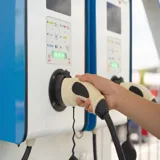
Emporia Smart Level 2 48A
Emporia
Best value smart charger on the market. 48A output with WiFi, energy monitoring, TOU scheduling, and solar integration. ENERGY STAR certified. Pairs with Emporia Vue for whole-home energy tracking.
Grizzl-E Classic 40A
Grizzl-E
The most durable home EV charger on the market. NEMA 4X aluminum enclosure rated from -30°F to 122°F. Adjustable amperage (16/24/32/40A). Designed and tested in Canada for extreme weather reliability.
EV Charger Rebates in Nearby States
Related Guides & Tools
Frequently Asked Questions
Does the Austin Energy EV360 rebate cover the full cost of a Level 2 install in Travis County?
How do I know if my Houston address is in Oncor or CenterPoint territory?
Can I claim the federal 30C credit on a Permian Basin install in Midland or Odessa?
How does the HB1500 EV registration fee affect Texas EV ownership economics?
What does CPS Energy require for the $500 San Antonio rebate?
Will a Free Nights plan actually save money in humid Houston summers?
Do I need a NEMA 4X charger for an outdoor install in El Paso or Laredo?
Are Pedernales Electric Cooperative members eligible for any EV charger rebates?
CheapEVCharger Editorial Team
Independent EV charging editorial team. We compare home chargers based on manufacturer specifications, verified Amazon customer reviews, and real-time pricing data — never influenced by manufacturers.
Data sources: Product specifications from manufacturer websites, pricing and customer reviews from Amazon.com and Amazon.de, installation costs from industry reports, electricity rates from U.S. EIA and DOE.
Enjoyed this article?
Practical EV home-charging tips, honest charger picks, and NACS-transition updates — straight to your inbox.
No spam. Unsubscribe anytime.