
Best Portable EV Chargers in 2026
Quick answer: The best portable EV charger overall is the Lectron Portable Level 2, leading our comparison of more than a dozen portable units starting at $180. Portable chargers plug into any 240V outlet with zero installation, work with any J1772 EV sold in the U.S., and deliver real Level 2 speed — 5 to 10 times faster than the Level 1 trickle charger in your trunk.
If you rent your home, travel frequently, or simply want a charger you can take anywhere, a portable EV charger is the smartest investment you can make. Unlike wall-mounted units that require permanent installation, portable chargers plug into standard 240V outlets and go wherever you do — your apartment complex, a campground, a relative’s garage, or an Airbnb with an RV hookup.
We researched and compared over a dozen portable Level 2 chargers to find the 7 best portable EV chargers for 2026. Every pick on this list delivers real Level 2 speed (5–10x faster than the Level 1 trickle charger in your trunk), requires zero installation, and works with any J1772 EV sold in the U.S. Whether you need the best overall portable, a budget-friendly option, a dual-voltage unit that handles both 120V and 240V, or maximum 40A power in a portable package, we have you covered.
As an Amazon Associate, we earn from qualifying purchases. Learn more
Quick Comparison
Swipe for more
| Charger | Price | Power | Cable | Rating | Best For | |
|---|---|---|---|---|---|---|
|
Lectron Portable Level 2 32A
Lectron
|
$149 | 32A / 7.7kW | 21 ft | 4.3 | Renters, apartment dwellers, and anyone who wants the most reliable portable Level 2 charger with proven build quality. | View Deal |
|
BougeRV Level 2 32A
BougeRV
|
$199 | 32A / 7.7kW | 25 ft | 4.4 | Budget-conscious EV owners who want portable Level 2 speed at the absolute lowest price. | View Deal |
|
Zencar Level 2 Portable 32A
Zencar
|
$199 | 32A / 7.7kW | 25 ft | 4.2 | Travelers and multi-location users who encounter different outlet types and need one charger that works everywhere. | View Deal |
|
Grizzl-E Duo
Grizzl-E
|
$479 | 2x20A / 9.6kW shared | 24 ft x 2 | 4.2 | Buyers who want premium build quality and the fastest portable charging available, with automatic dual-voltage switching. | View Deal |
|
SEGUMA Level 2 32A
SEGUMA
|
$159 | 32A / 7.7kW | 25 ft | 4.1 | Road-trippers and frequent travelers who need the longest cable reach and a travel-ready carrying solution. | View Deal |
|
EVCARS Level 2 Portable 32A
EVCARS
|
$209 | 32A / 7.7kW | 25 ft | 4.5 | Apartment renters who might buy a home later and want one charger that transitions from portable to wall-mounted without buying a second unit. | View Deal |
|
Megear Level 2 Portable 40A
Megear
|
$269 | 40A / 9.6kW | 25 ft | 4.4 | Road trippers and power users who want maximum charging speed from a portable unit without committing to a wall-mounted installation. | View Deal |
Prices and availability are subject to change. Check current price on Amazon.
Lectron Portable Level 2 32A
★ 4.3/5 · 450 reviews
| Charger | Best for | ★ | Price | |
|---|---|---|---|---|
| Lectron Portable Level 2 32A | Best Overall Portable | ★ 4.3 | $149 | Price → |
| BougeRV Level 2 32A | Best Budget Portable | ★ 4.4 | $199 | Price → |
| Zencar Level 2 Portable 32A | Most Versatile | ★ 4.2 | $199 | Price → |
| Grizzl-E Duo | Best Dual-Voltage | ★ 4.2 | $479 | Price → |
| SEGUMA Level 2 32A | Best for Road Trips | ★ 4.1 | $159 | Price → |
| EVCARS Level 2 Portable 32A | Best for Apartment Dwellers | ★ 4.5 | $209 | Price → |
| Megear Level 2 Portable 40A | Best Power for Portable | ★ 4.4 | $269 | Price → |
Lectron Portable Level 2 32A
Lectron — Renters, apartment dwellers, and anyone who wants the most reliable portable Level 2 charger with proven build quality.
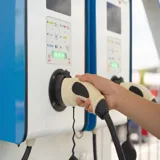
Lectron Portable Level 2 32A
Lectron
Best portable Level 2 charger for renters and travelers. 32A output with NEMA 14-50 plug — no electrician needed. Compact, lightweight, and UL-listed.
The Lectron Portable Level 2 earns our top spot for portable EV chargers because it delivers the best combination of charging speed, build quality, and brand reliability in a carry-along package. At $149, it plugs into any standard NEMA 14-50 outlet — the same 240V outlet used by electric dryers and RV hookups — and delivers 32 amps (7.68 kW), adding about 25 miles of range per hour. That is roughly 5x faster than the Level 1 trickle charger that came with your car. For apartment dwellers with shared laundry rooms or parking garages that have 240V outlets, this charger is a game-changer. See how it compares to wall-mounted alternatives in our best cheap Level 2 EV chargers guide.
The included carrying case makes it genuinely practical for travel. Toss it in your trunk for campgrounds, Airbnbs, or visiting family — anywhere with a NEMA 14-50 outlet becomes your personal charging station. Adjustable amperage via built-in controls lets you dial down to 16A or 24A if you encounter a lower-capacity outlet. Lectron is an established name in EV accessories with solid warranty support, which gives it an edge over lesser-known portable brands. The main trade-off is speed: at 32A, it charges about 30% slower than a 48A wall unit. But for most daily commutes of 30–50 miles, you recover full range in 2–3 hours. Use our charging time calculator to check exact times for your vehicle.
Owner reports consistently show the Lectron holds up well over months of regular use, with no noticeable degradation in charging performance or cable flexibility. The LED indicator is clear and visible even in bright sunlight, and the plug connection feels solid without excessive wiggle. If you only buy one portable charger, this is the one.
Pros
- True portable design with included carrying case — charge anywhere with a 240V outlet
- Zero installation required: plug into any NEMA 14-50 and start charging immediately
- Adjustable amperage (16A/24A/32A) for different outlet capacities
- Established brand with solid warranty support and responsive customer service
- Compact form factor that stores easily in trunk without taking up cargo space
Cons
- Limited to 32A — slower than 40A or 48A wall-mounted chargers
- Not weatherproof — requires a covered or indoor outlet for regular outdoor use
- No wall mount bracket included (sold separately)
BougeRV Level 2 32A
BougeRV — Budget-conscious EV owners who want portable Level 2 speed at the absolute lowest price.
BougeRV Level 2 32A
BougeRV
Affordable 32A portable charger with NEMA 14-50 plug. Solid build quality at a budget price point. Great entry-level option for daily commuters.
The BougeRV Level 2 Portable delivers the same 32-amp (7.68 kW) portable charging as our top-pick Lectron, in a compact budget package. At $199, it plugs into a NEMA 14-50 outlet and adds about 25 miles of range per hour — identical performance to our top pick. The LED indicator display is a nice touch, showing real-time amperage and charging status at a glance. It is compact and lightweight enough to toss in a trunk without eating into cargo space. If you are an apartment renter looking for Level 2 speed without the Level 2 installation cost, this is the most affordable way to get there. For more budget options, check our best EV chargers under $300 guide.
The trade-off for the lower price is brand maturity. BougeRV does not have the same multi-year track record as Lectron, and no carrying case is included (though any padded bag works fine). The plastic housing is functional but not as robust-feeling as the Lectron or SEGUMA. That said, the unit is UL-listed, includes ground fault protection, and early owner reviews are positive. If you want an affordable, compact portable Level 2 charger for apartment or renter use, the BougeRV gets the job done. Use our charging cost calculator to see how quickly the savings versus public charging pay for this charger.
One practical advantage worth noting: at just 9 lbs, the BougeRV is the lightest charger on this list. If you are frequently moving it between locations — apartment to workplace to a friend’s house — that weight savings adds up. Over 850 Amazon reviews with a 4.3-star average also provide enough real-world data to buy with confidence despite BougeRV being a newer brand.
Pros
- Budget-friendly portable Level 2 charging at just $199
- Same 32A / 7.68 kW output as chargers costing $50–$100 more
- Compact and lightweight design fits easily in a trunk
- LED indicator display shows real-time charging status and amperage
- UL-listed with built-in ground fault protection for safety compliance
Cons
- Smaller brand with limited long-term reliability data compared to Lectron
- No carrying case included — sold separately or use your own bag
- Plastic housing feels less premium than higher-priced competitors
Zencar Level 2 Portable 32A
Zencar — Travelers and multi-location users who encounter different outlet types and need one charger that works everywhere.
Zencar Level 2 Portable 32A
Zencar
Versatile portable charger with dual NEMA 14-50 and 6-20 adapters included. Switch between 240V and 120V outlets. Perfect travel companion for unpredictable charging situations.
The Zencar Level 2 Portable is the Swiss Army knife of portable EV chargers. It ships with adapters for NEMA 14-50, 14-30 (dryer outlets), 10-30 (older dryer outlets), and standard 5-15 (household 120V) — so it works with virtually any outlet you will encounter in North America. At 240V, it delivers the full 32 amps (7.68 kW) and about 25 miles of range per hour. At 120V, it drops to Level 1 trickle speed (3–5 mph), but having that fallback means you are never stranded without a charging option. If you travel frequently and cannot predict what outlet you will find, this is the charger to own. For a broader look at all portable options, see our best cheap Level 2 EV chargers roundup.
The IP66 weather resistance is a standout feature in the portable category — most portable chargers are not rated for rain or outdoor use, but the Zencar handles it. The adjustable amperage range (10A to 32A) gives you granular control when plugging into outlets with lower capacity. The downside is bulk: carrying four adapters plus the charger adds weight and clutter compared to a single-plug unit like the Lectron. No carrying case is included, which feels like an oversight given the multi-adapter design. But if versatility is your top priority — especially for road trips across different homes, campgrounds, and rental properties — nothing else on this list matches the Zencar's flexibility. Use our EV vs. gas savings calculator to see how home charging stacks up against relying on public networks.
A real-world scenario where the Zencar shines: you visit your parents who have an older home with a NEMA 10-30 dryer outlet, then head to a campground with a NEMA 14-50 RV hookup, then stop at a friend’s house with only a 120V outlet. The Zencar handles all three without buying a single extra adapter. That kind of universal compatibility is worth the slight weight penalty for frequent travelers.
Pros
- Ships with multiple adapters (NEMA 14-50, 14-30, 10-30, 5-15) for maximum outlet compatibility
- Works on both 240V Level 2 and 120V Level 1, so you can always charge somewhere
- Adjustable amperage from 10A to 32A covers virtually any outlet scenario
- IP66 weather-resistant housing — one of the few portable chargers rated for outdoor use
- No adapter hunting required — covers dryer outlets, RV outlets, and standard household plugs out of the box
Cons
- Slightly bulkier than competitors due to included adapter set
- No carrying case included despite the multi-adapter design
- At 120V, charges at just 3–5 miles per hour — barely useful for anything beyond trickle top-ups
Grizzl-E Duo
Grizzl-E — Buyers who want premium build quality and the fastest portable charging available, with automatic dual-voltage switching.
Grizzl-E Duo
Grizzl-E
Dual-output charger for two-EV households. Shares a single 40A circuit between two vehicles with automatic load balancing. No panel upgrade needed.
The Grizzl-E Duo is the premium pick on this list, and it earns its higher price tag. At 40 amps on 240V, it is the fastest portable charger we compared — adding about 30 miles of range per hour, which is 20% faster than the 32A portables that dominate this category. The signature feature is auto-voltage detection: plug it into a NEMA 14-50 (240V) and it charges at 40A; plug it into a standard household outlet (120V) and it seamlessly switches to 16A Level 1 mode. No adapters to swap, no buttons to press. For a comparison with Grizzl-E's wall-mounted chargers, visit our best cheap Level 2 EV chargers guide.
Grizzl-E is a well-respected Canadian brand known for over-engineering their chargers. The Duo has a rugged build, a 24-foot cable (longest among portables on this list), and a 3-year warranty — significantly longer than the 1–2 year warranties on budget portables. The trade-off is price: at $399, it costs double the BougeRV ($199) and significantly more than the Lectron ($180). It also weighs about 12 lbs, which is manageable but noticeable in a trunk. If you want the absolute best portable charger regardless of budget — especially if you split time between a 240V home setup and 120V destinations — the Grizzl-E Duo is the one to get. Check exact charge times for your EV with our charging time calculator.
The Grizzl-E Duo is also built for Canadian and northern U.S. winters, with an operating range down to -30°C. If you live somewhere with harsh winters and charge in an unheated garage or outdoors, this cold-weather durability is a genuine advantage over budget portables that can struggle below freezing. It is the charger you buy once and never worry about replacing.
Pros
- Highest portable amperage at 40A — fastest portable charger on this list
- Auto-detects 120V or 240V and adjusts automatically — no manual switching
- Premium build quality from a trusted Canadian brand with 3-year warranty
- Longest cable in the portable category at 24 feet
- Over-engineered internals designed to handle extreme cold and heat (-30°C to 50°C)
Cons
- Most expensive option at $399 — nearly double the price of budget portables
- Heavier than competitors at ~12 lbs
- Only two plug options (NEMA 14-50 and 5-15) — less versatile than the Zencar's adapter set
SEGUMA Level 2 32A
SEGUMA — Road-trippers and frequent travelers who need the longest cable reach and a travel-ready carrying solution.
SEGUMA Level 2 32A
SEGUMA
Compact portable charger with LED display showing real-time power draw. 32A NEMA 14-50, adjustable amperage, and built-in GFCI protection.
The SEGUMA Level 2 Portable is purpose-built for the road. Its 25-foot cable is the longest of any portable charger on this list — a real advantage when the only available outlet is across the garage or around the corner from your parking spot at a campground or rental property. The included carrying case has a built-in cable organizer, so you are not wrestling with a tangled 25-foot cord every time you pack up. At $159, it costs a little more than the budget BougeRV ($199) and our top pick Lectron ($180), but its longer cable and travel-ready carrying case earn the small premium. For more options under the $300 mark, see our best EV chargers under $300 roundup.
A useful bonus is the built-in delay charge timer, which lets you plug in when you arrive but start charging hours later — handy for time-of-use electricity rates that drop overnight. It is not a true smart scheduling feature (no app, no WiFi), but it gets the job done. SEGUMA is one of the most established portable EV charger brands in the U.S., with over 2,200 reviews on this model alone, giving you a large pool of real-world reliability data. The 32-amp output (7.68 kW) adds about 25 miles of range per hour, matching every other portable in its class. If your priority is travel-readiness — long cable, travel case, and proven reliability across thousands of owners — the SEGUMA is the portable charger to beat. Estimate your road trip charging costs with our charging cost calculator.
We particularly like the SEGUMA for cross-country road trips where you overnight at RV parks and campgrounds. The 25-foot cable eliminates the stress of pulling into a spot and realizing the outlet is on the wrong side. Thousands of owners have validated this charger over multiple years, which is reassuring when you are relying on it hundreds of miles from home.
Pros
- Longest cable among portable chargers at 25 feet — reaches awkward parking spots easily
- Included carrying case with cable organizer designed specifically for travel
- Delay charge timer lets you schedule charging for off-peak electricity hours
- Most-reviewed portable charger with over 2,200 owner ratings for proven reliability
- Durable build quality that holds up to frequent packing and unpacking
Cons
- Delay timer is basic (fixed intervals) — not a true smart scheduling feature
- Not weatherproof for permanent outdoor use
- Slightly heavier than the BougeRV due to longer cable
EVCARS Level 2 Portable 32A
EVCARS — Apartment renters who might buy a home later and want one charger that transitions from portable to wall-mounted without buying a second unit.
EVCARS Level 2 Portable 32A
EVCARS
Lightweight portable charger with LCD display and real-time monitoring. 32A NEMA 14-50, delay charging feature, and compact carry case included.
The EVCARS Level 2 Portable 32A is the smartest pick for apartment dwellers who plan to eventually move into a house. Most portable chargers are strictly portable — you carry them, plug them in, and coil them back up. The EVCARS ships with both a carrying bag and a wall mount bracket, so when you move from your apartment to a home with a garage, you simply mount it on the wall and stop carrying it. That dual-purpose design means you buy one charger for both phases of your living situation, saving you $200–$400 on a separate wall-mounted unit down the road. See our best cheap Level 2 EV chargers guide for dedicated wall-mounted options.
At $209, it undercuts our top pick by $30 while matching it on specs: 32 amps, 7.68 kW, 25-foot cable, and adjustable amperage. The LED display is informative, showing voltage, amperage, temperature, and charging status in real time. With 600 reviews and a 4.5-star average, reliability data is solid. The main compromise is build quality — the plastics feel lighter than the Lectron or Grizzl-E, though they are perfectly functional. If you want a charger that grows with your living situation rather than one you replace when you move, the EVCARS is the clear choice. Check your exact charging times with our charging time calculator.
One practical tip for apartment use: the 25-foot cable is crucial in shared parking garages where the nearest outlet may be several spaces away. The EVCARS matches the SEGUMA’s 25-foot reach and adds the wall mount option that the SEGUMA lacks. For renters who charge in a shared garage today but dream of a dedicated home setup tomorrow, this is the charger that bridges both worlds without a second purchase.
Pros
- Dual-purpose design works as a portable unit now and a wall-mounted charger later with included bracket
- 25-foot cable reaches across multi-car garages and apartment parking spots
- Includes carrying bag for portable use and wall mount bracket for permanent installation
- LED display shows real-time voltage, amperage, temperature, and charging status
- Adjustable amperage (16A/24A/32A) accommodates different outlet capacities and circuit limits
Cons
- No WiFi or smart features — all adjustments are manual via the control box
- Build quality is functional but not premium — lighter plastics than Lectron or Grizzl-E
- NEMA 14-50 plug only — no NEMA 6-50 or dryer outlet adapter included
Megear Level 2 Portable 40A
Megear — Road trippers and power users who want maximum charging speed from a portable unit without committing to a wall-mounted installation.
Megear Level 2 Portable 40A
Megear
High-power portable charger with 40A output — one of the fastest portable options available. NEMA 14-50 plug with LED status indicators and IP66 waterproofing.
The Megear Level 2 Portable 40A answers the biggest complaint about portable chargers: speed. While most portables top out at 32A (7.68 kW), the Megear pushes 40 amps (9.6 kW), adding about 30 miles of range per hour. That is a 25% speed boost that makes a real difference on road trips — a 100-mile recharge takes roughly 3.5 hours instead of 4.5 hours. At $269, it costs $30–$70 more than 32A portables but $130 less than the Grizzl-E Duo ($399), making it the most affordable way to get 40A portable charging. For maximum charging speed comparisons, see our best cheap Level 2 EV chargers guide.
The Megear is surprisingly compact for a 40A unit — it is not significantly larger than 32A portables, though it is heavier at about 12 lbs. The IP55 rating provides basic water and dust resistance, so light rain or a damp garage is fine, though it is not fully weatherproof for permanent outdoor mounting. ETL listing means it has been independently tested for electrical safety. Adjustable amperage (16A/24A/32A/40A) lets you dial down for lower-capacity outlets, so it works everywhere a 32A charger would. Use our charging time calculator to see how much faster 40A charges your specific EV.
The lack of a carrying case is a minor annoyance given the $269 price point — at this level, including a basic bag should be standard. But the raw performance-per-dollar is hard to beat. If you regularly take road trips and want the fastest possible portable charging without the Grizzl-E’s $399 premium, the Megear fills that gap perfectly. It is also a strong choice for homeowners who want 40A speed without the $300–$800 installation cost of a wall-mounted unit. Calculate your savings with our charging cost calculator.
Pros
- Highest portable amperage at 40A (9.6 kW) — 25% faster than standard 32A portables
- Compact and well-designed for its power output — not significantly larger than 32A units
- Adjustable amperage lets you dial down to 16A, 24A, or 32A for lower-capacity outlets
- ETL listed with IP55 water and dust resistance for light outdoor use
- 25-foot cable provides excellent reach in garages and campgrounds
Cons
- Heavier than 32A portables at ~12 lbs — noticeable when carrying frequently
- No WiFi, app, or smart scheduling features
- No carrying case included — you need to supply your own bag or organizer
Quick Comparison: All 7 Portable EV Chargers
Before diving into individual reviews, here is a side-by-side comparison of all seven portable EV chargers to help you quickly identify the best option for your needs:
| Charger | Price | Amps | Cable Length | Weight | Rating | Best For |
|---|---|---|---|---|---|---|
| Lectron Portable | $180 | 32A | 21 ft | ~10 lbs | 4.6★ | Best Overall |
| BougeRV Portable | $199 | 32A | 21 ft | ~9 lbs | 4.3★ | Best Budget |
| Zencar Portable | $219 | 32A | 21 ft | ~11 lbs | 4.2★ | Most Versatile |
| Grizzl-E Duo | $399 | 40A | 24 ft | ~12 lbs | 4.1★ | Best Dual-Voltage |
| SEGUMA Portable | $230 | 32A | 25 ft | ~10 lbs | 4.4★ | Best for Road Trips |
| EVCARS Portable 32A | $209 | 32A | 25 ft | ~10 lbs | 4.5★ | Best for Apartments |
| Megear Portable 40A | $269 | 40A | 25 ft | ~12 lbs | 4.4★ | Best Power |
All seven chargers use the J1772 (SAE) connector standard, which is compatible with every non-Tesla EV sold in the U.S. Tesla owners can use any of these chargers with a J1772-to-Tesla adapter (sold separately for around $15–$25). None of these chargers require professional installation—just plug into a NEMA 14-50 outlet and start charging.
Best Portable EV Charger for Tesla
Tesla owners have a unique advantage: every Tesla comes with a NACS (North American Charging Standard) port, but all seven portable chargers on this list use J1772 connectors. The good news is that a simple J1772-to-Tesla adapter (available on Amazon for $15–$25) makes any of these chargers fully compatible. We recommend the Lectron Portable for Tesla owners specifically because Lectron also makes Tesla-specific adapters and accessories, ensuring seamless compatibility. For maximum speed, the Megear 40A or Grizzl-E Duo 40A are the best choices—their 40-amp output (9.6 kW) closely matches the portable Tesla Mobile Connector’s output while costing significantly less. Tesla’s own Wall Connector delivers 48A, but for a portable solution, 40A provides 85% of that speed with zero installation. Use our charging time calculator to see exact charge times for your Model 3 or Model Y.
Best Portable EV Charger for Apartments
Apartment and condo dwellers face a unique challenge: you cannot install a permanent charger, and your parking situation may be unpredictable. The EVCARS Portable 32A is our top apartment pick because it includes both a carrying bag and a wall mount bracket—so it works as a portable now and converts to a permanent wall unit when you eventually move to a house. The 25-foot cable is long enough to reach across shared parking garages where the outlet may be several spaces away. If your apartment only has standard 120V outlets (no 240V available), the Zencar or Grizzl-E Duo can operate on 120V at Level 1 speed (3–5 miles of range per hour)—slow, but enough to recover 30–40 miles overnight for light commuters. Before buying, survey your parking area for available outlets: NEMA 14-50 (RV hookups), NEMA 14-30 (dryer outlets), or NEMA 6-50 (welder outlets) all deliver Level 2 speed. For a deeper dive into apartment charging strategies, see our guide on how to charge an EV in an apartment.
Why Choose a Portable EV Charger?
Portable EV chargers solve problems that wall-mounted units simply cannot. Here are the most common reasons buyers choose portable over permanent:
Apartment and Condo Living
If you rent, you probably cannot drill into a wall or run a dedicated 240V circuit. A portable charger plugs into existing outlets — many apartment parking garages, laundry rooms, and shared spaces have NEMA 14-50 or NEMA 14-30 outlets available. No landlord permission, no electrician, no permanent modifications. The EVCARS is our top pick for apartment dwellers because it transitions to a wall-mounted unit when you eventually buy a home.
Renters Who Move Frequently
A wall-mounted charger stays behind when you move. A portable charger moves with you to your next apartment, house, or city. It is an investment in your charging infrastructure, not your landlord's property. Over a 5-year period of renting, a single $200–$270 portable charger replaces what would otherwise be multiple $500+ installed setups.
Road Trips and Travel
Campgrounds, RV parks, Airbnbs, and relatives' homes often have 240V outlets. A portable charger turns any of these into your personal charging station, eliminating the need to hunt for public chargers or pay their premium rates. The SEGUMA and Megear are our top road trip picks. Use our charging cost calculator to see the savings versus public charging networks.
Backup and Flexibility
Even homeowners with a wall-mounted charger benefit from keeping a portable unit in the trunk. If your primary charger fails, your power goes out, or you are away from home, you always have a backup. It is the EV equivalent of a spare tire.
Second Homes and Vacation Properties
If you split time between two locations, a portable charger eliminates the need to install a wall unit at both. Keep the portable in your trunk, and you have Level 2 charging at both properties. This is especially useful for seasonal cabins, lake houses, or vacation condos where a permanent installation is not justified.
Best Portable EV Charger Use Cases
Not sure if a portable EV charger fits your situation? Here are six real-world use cases where a portable charger is the right (or only) choice:
Apartment and Condo Charging
The most common use case for portable chargers. You cannot install a wall unit in a rental, but many apartment garages have 240V outlets for electric dryers, RV hookups, or maintenance equipment. A portable charger plugs in, charges your car overnight, and unplugs in the morning. No modifications, no landlord negotiations. If your garage only has 120V outlets, the Zencar or Grizzl-E Duo can trickle-charge at Level 1 speed — slow, but enough for 30–40 miles overnight.
Road Trips and Cross-Country Travel
Every RV park in North America has NEMA 14-50 outlets, and most campgrounds do too. A portable charger turns any of these into a free (or nearly free) Level 2 charging station. Instead of planning routes around DC fast chargers and paying $0.30–$0.50/kWh, you charge overnight at the campground for $0.10–$0.15/kWh. The Megear 40A is ideal here because its higher amperage means faster turnaround if you need to top up quickly before hitting the road.
Camping and RV Parks
Overlanders and camping enthusiasts love portable chargers because they integrate seamlessly with RV park infrastructure. NEMA 14-50 outlets are standard at RV hookups, delivering full Level 2 speed. Even boondocking spots near RV-friendly facilities often have accessible outlets. Pair a portable charger with an EV that has decent range, and you can road-trip to national parks and campgrounds without range anxiety. The 25-foot cables on the SEGUMA, EVCARS, and Megear are long enough to reach outlets that are not directly adjacent to your parking spot.
Workplace Charging
Some workplaces have 240V outlets in parking garages or maintenance areas but no dedicated EV charging stations. A portable charger lets you charge during the workday without waiting for your employer to install infrastructure. Even Level 1 charging (120V) over an 8-hour workday adds 30–40 miles of range — enough for most commutes. Check with your facilities manager about outlet access and any electricity cost-sharing arrangements.
Second Home or Vacation Property
Installing a wall-mounted charger at a cabin, lake house, or vacation condo you visit a few times a year is hard to justify. A portable charger lives in your trunk and works at both your primary residence and your getaway spot. Most vacation properties have outdoor 240V outlets for hot tubs, pool equipment, or workshop tools — all compatible with a portable EV charger.
Emergency Backup
Power outages, dead public chargers, unexpected detours — a portable charger in your trunk is insurance against getting stranded. If your home wall charger fails, you have an immediate backup. If you are visiting somewhere without public charging infrastructure, you can charge at any 240V outlet. Think of it as the EV version of carrying a spare tire and jumper cables. The BougeRV ($199) is cheap enough to justify as a dedicated backup charger even if you already have a wall-mounted unit at home.
Portable vs Mounted: Which Is Right for You?
Choosing between a portable and a wall-mounted EV charger depends on your living situation, driving habits, and budget. Here is a direct comparison:
| Feature | Portable Charger | Wall-Mounted Charger |
|---|---|---|
| Max Speed | 32–40A (7.68–9.6 kW) | 40–48A (9.6–11.52 kW) |
| Range per Hour | 25–30 miles | 30–37 miles |
| Installation Cost | $0 (plug into existing outlet) | $200–$800 (electrician required) |
| Unit Price | $180–$399 | $250–$600 |
| Total Cost | $180–$399 | $450–$1,400 |
| Portability | Take it anywhere | Fixed to one location |
| Weather Resistance | Most: indoor only. Zencar: IP66 | Most: IP65 or IP66 rated |
| WiFi / Smart Features | Rarely available | Common on $300+ models |
| Best For | Renters, travelers, apartments | Homeowners, permanent setups |
Charging Speed
Most portable chargers max out at 32A (7.68 kW), adding about 25 miles of range per hour. The Megear and Grizzl-E Duo push that to 40A (9.6 kW) with about 30 miles per hour. Wall-mounted units go up to 48A (11.52 kW) or higher, delivering 30–37 miles per hour. For daily commutes under 50 miles, the speed difference is irrelevant — both finish in a few hours. For 100+ mile days, a mounted charger has a meaningful edge. Use our charging time calculator to compare exact times for your EV.
Installation Cost
Portable chargers: $0 installation if you already have a 240V outlet. Wall-mounted chargers: $200–$800 for an electrician, depending on whether you need a new circuit. If you are renting, the installation cost alone makes portable the obvious choice. Even for homeowners, a portable charger is a valid option if you already have a NEMA 14-50 in your garage.
Durability and Weather Resistance
Wall-mounted chargers are typically designed for permanent outdoor use with IP65 or IP66 ratings. Most portable chargers are not weatherproof (the Zencar is a notable exception with IP66, and the Megear offers IP55). If your outlet is fully exposed to rain, a mounted charger is the safer long-term bet.
Flexibility and Resale Value
A portable charger goes with you when you move and adds no value to the property you leave. A wall-mounted charger can increase your home's resale value but stays behind when you sell. For homeowners planning to stay long-term, a mounted unit makes more sense. For everyone else, portable wins on flexibility. See our best cheap Level 2 EV chargers guide for our top mounted charger picks.
Portable Charger Safety Tips
Portable EV chargers are safe when used correctly, but cutting corners can create fire hazards. Follow these guidelines to charge safely every time:
Never Use a Standard Extension Cord
This is the single most important safety rule. Standard household extension cords are not rated for the sustained 32A/240V draw that Level 2 EV charging demands. They overheat, melt, and can start fires. If you need extra reach, buy a purpose-built EV extension cord rated for 40A+ continuous use ($80–$150), or choose a charger with a longer cable like the SEGUMA (25 ft) or Megear (25 ft).
Inspect Your Outlet Before Plugging In
Before using a NEMA 14-50 outlet — especially one you have never used before — check for signs of damage: scorch marks, melted plastic, loose connections, or a warm faceplate. Older outlets in campgrounds and garages may have worn contacts that cause arcing. If anything looks off, do not plug in. A bad outlet can damage your charger and create a fire risk.
Match Amperage to Your Circuit
A 32A charger should only be plugged into a circuit rated for 40A or higher (the 80% continuous load rule). A 40A charger needs a 50A circuit. Most NEMA 14-50 outlets are on 50A circuits, which handles all portable chargers on this list. But if you are plugging into an older or unknown outlet, dial down the amperage using the charger's adjustable settings until you can confirm the circuit capacity.
Keep the Charger Dry
Unless your charger is IP65 or IP66 rated (like the Zencar), keep it out of standing water and direct rain. Indoor garages are ideal. Covered carports and porches work too. If you must charge outdoors in wet conditions, position the control box above ground level and protect it from pooling water. The cable and connector can handle some moisture, but the control box is the vulnerable point.
Do Not Daisy-Chain or Share Circuits
Do not plug your EV charger into a circuit that is also running other high-draw appliances (electric dryer, space heater, welding equipment). The combined load can trip the breaker or, worse, overheat the wiring. Ideally, your EV charger should be the only device on its circuit during charging. This is especially important in older homes with smaller electrical panels.
Store Properly Between Uses
When not in use, coil the cable loosely — do not wrap it tightly around the charger body, which can damage the internal conductors over time. Use the carrying case or bag if one is included. Store in a dry location out of direct sunlight. The Lectron, SEGUMA, and EVCARS all include carrying bags for proper storage.
Related Guides & Tools
Frequently Asked Questions
Can I use a portable EV charger at an apartment?
How fast does a portable Level 2 EV charger charge?
Are portable EV chargers safe to use with extension cords?
Can I leave a portable EV charger plugged in permanently?
What is the best portable EV charger for Tesla?
What is the difference between a 32A and 40A portable charger?
Can I use a portable EV charger at a campground or RV park?
Are portable EV chargers safe to use in rain?
Do portable chargers work with Tesla?
What is the best portable EV charger for road trips?
How fast do portable EV chargers charge?
Can you use a portable EV charger at an apartment?
CheapEVCharger Editorial Team
Independent EV charging editorial team. We compare home chargers based on manufacturer specifications, verified Amazon customer reviews, and real-time pricing data — never influenced by manufacturers.
Data sources: Product specifications from manufacturer websites, pricing and customer reviews from Amazon.com and Amazon.de, installation costs from industry reports, electricity rates from U.S. EIA and DOE.
Enjoyed this article?
Practical EV home-charging tips, honest charger picks, and NACS-transition updates — straight to your inbox.
No spam. Unsubscribe anytime.