
How to Install an EV Charger at Home
Installing a home EV charger is one of the best investments you can make as an electric vehicle owner. Charging at home is up to 60% cheaper than using public chargers, and you wake up every morning with a full battery. But the installation process can feel overwhelming—permits, electrical panels, circuit breakers, and wiring all come into play.
This guide walks you through everything you need to know about installing a Level 2 EV charger at home, from assessing your electrical panel to understanding local permit requirements. Whether you plan to hire an electrician or tackle the project yourself, you will finish this article with a clear roadmap and realistic cost expectations.
Prices, availability, and program terms are subject to change. Last verified: March 16, 2026. We strive for accuracy but recommend verifying details before purchase.
What You Need Before Installation
Before you purchase a charger or call an electrician, you need to evaluate your home's electrical infrastructure. Skipping this step is the number-one reason homeowners face unexpected costs or project delays.
1. Check Your Electrical Panel Capacity
Most Level 2 EV chargers draw between 24 and 48 amps on a dedicated 240-volt circuit. That means your electrical panel needs enough spare capacity to support the new load. Here is how to assess your situation:
- 200-amp panel: You are in good shape. Most homes with a 200-amp service can accommodate a 40- or 50-amp EV circuit without a panel upgrade. This is the most common scenario for homes built after 2000.
- 100-amp panel: This is where things get tricky. A 100-amp panel may already be near capacity if you have central air conditioning, an electric dryer, an electric water heater, or an electric range. You may need a panel upgrade ($1,500–$3,000) or a load-management device.
- 60-amp panel: Found in older homes. A panel upgrade is almost always required. Budget $2,000–$4,000 for the upgrade alone.
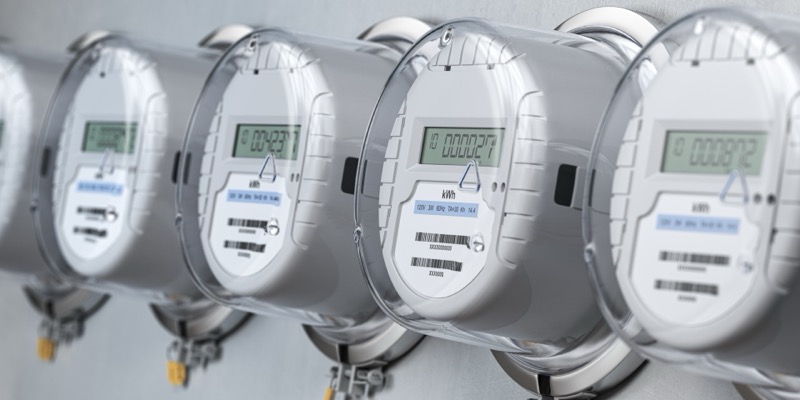
To check your panel capacity, open your breaker box and look at the main breaker at the top. It will be labeled with its amperage. Then add up the amperages of all existing breakers. If the total exceeds 80% of your main breaker rating, you will likely need an upgrade or a load-sharing solution.
2. Determine the Installation Location
Where you mount the charger matters more than most people realize. Consider these factors:
- Distance from the panel: Every additional foot of wire run adds cost. Ideally, your charger should be within 25 feet of the electrical panel. Runs of 50 feet or more can add $500–$1,000+ in wiring costs.
- Indoor vs. outdoor: If your panel is in the basement and you park in a detached garage, you will need an outdoor-rated (NEMA 4) charger and possibly a trench for underground conduit. This is the most expensive scenario.
- Mounting surface: Chargers can be mounted on drywall (with proper backing), concrete, brick, or wood studs. Make sure you have a solid surface at the right height.
- Cable reach: Measure the distance from the charger mounting point to your vehicle's charge port. Most chargers come with 18–25 feet of cable, but some budget models only include 16 feet.
3. Choose the Right Charger
Not all Level 2 chargers are the same. Key specifications to match to your installation:
| Specification | Budget Option | Mid-Range | Premium |
|---|---|---|---|
| Amperage | 24A | 32A | 40–48A |
| Circuit Required | 30A breaker | 40A breaker | 50–60A breaker |
| Charge Speed (miles/hr) | ~18 mi/hr | ~25 mi/hr | ~30–37 mi/hr |
| Wire Gauge Needed | 10 AWG | 8 AWG | 6 AWG |
| Typical Price | $200–$300 | $300–$500 | $500–$800 |
For most drivers, a 32-amp charger on a 40-amp circuit hits the sweet spot between cost and charging speed. You can browse our best cheap Level 2 EV chargers list for top-rated affordable options.
4. Gather Required Tools and Materials
If you plan to do any portion of the work yourself, you will need:
- Wire (6/2 or 8/2 NM-B for indoor, or THWN in conduit for outdoor)
- Appropriately-sized breaker (40A or 50A double-pole)
- Conduit and fittings (if running outdoors or through unfinished spaces)
- NEMA 14-50 outlet (if using a plug-in charger) or direct-wire box
- Voltage tester, wire strippers, screwdrivers, drill with masonry bits (if mounting on concrete)
Always purchase wire and breakers that match the National Electrical Code (NEC) Article 625 requirements for Electric Vehicle Supply Equipment (EVSE). We cover this in detail in the permits section below.
DIY vs Professional Installation
One of the first decisions you will face is whether to install the charger yourself or hire a licensed electrician. Both approaches have legitimate pros and cons, and the right choice depends on your skills, local codes, and comfort level with electrical work.
When DIY Makes Sense
A DIY installation can save you $500–$1,500 in labor costs. It may be a good fit if:
- Your electrical panel is in the same garage where you will charge, keeping the wire run short (under 15 feet).
- You are installing a plug-in charger (NEMA 14-50), and a 240V outlet already exists near the parking spot—for example, a dryer outlet in a garage. In this case, "installation" is literally plugging in the unit.
- You have experience with residential electrical work and understand breaker sizing, wire gauge requirements, and grounding.
- Your local jurisdiction allows homeowner electrical permits (many do, but some require a licensed electrician for 240V circuits).
When You Should Hire a Professional
Hire a licensed electrician if any of the following apply:
- Panel upgrade needed: Working inside the main breaker panel involves live bus bars carrying the full service amperage. This is genuinely dangerous and should only be done by a licensed professional.
- Long wire runs or outdoor conduit: Running wire through walls, attics, crawlspaces, or underground requires knowledge of code-compliant routing, derating, and weatherproofing.
- Permit and inspection required: Many jurisdictions require a licensed electrician to pull the permit. Even where homeowners can self-permit, having a pro ensures the inspection will pass the first time.
- Hardwired installation: If you choose a hardwired charger (no plug), the final connection must be made inside the charger's junction box, which some codes require a licensed person to perform.
- You are uncomfortable working with 240V electricity: There is no shame in this. A mistake with 240V can cause fires, serious injury, or death. The $500–$1,000 you save on labor is not worth the risk if you are unsure of what you are doing.
Cost Comparison: DIY vs Professional
| Cost Component | DIY | Professional |
|---|---|---|
| EV Charger Unit | $250–$600 | $250–$600 |
| Materials (wire, breaker, conduit) | $75–$300 | Included in labor |
| Permit Fee | $50–$200 | $50–$200 |
| Labor | $0 | $500–$1,500 |
| Total | $375–$1,100 | $850–$2,300 |
Keep in mind that some utility companies and states offer rebates of $200–$500 for installing a Level 2 charger, which can offset the cost of professional installation significantly. The U.S. Department of Energy maintains an up-to-date list of EV incentives by state. For a complete overview of safety requirements and best practices, the DOE's EV charging station installation guide is an excellent resource. Always verify that any charger you purchase is UL-certified for EV charging equipment to ensure it meets national safety standards.
Finding a Qualified Electrician
Not all electricians have experience with EV charger installations. When hiring, ask these questions:
- How many EV charger installations have you completed?
- Are you familiar with NEC Article 625 (Electric Vehicle Supply Equipment)?
- Will you handle the permit and inspection?
- Do you offer a warranty on the installation?
- Can you install a load-management device if my panel capacity is limited?
Get at least three quotes. Prices vary widely by region, and electricians who specialize in EV installations are often more efficient (and therefore cheaper) than general electricians who are doing it for the first time.
Step-by-Step Installation Guide
This step-by-step guide covers a typical hardwired Level 2 charger installation in an attached garage with the electrical panel nearby. Adjust the steps for your specific situation. If you are not comfortable with any step, stop and call a licensed electrician.
Step 1: Turn Off the Main Breaker
Safety first. Go to your electrical panel and flip the main breaker to the OFF position. Use a non-contact voltage tester to confirm there is no power at the panel. Even with the main breaker off, the service entrance wires above the main breaker are still live—do not touch them under any circumstances.
Step 2: Install the New Circuit Breaker
Remove the panel cover. Identify two adjacent open slots for a double-pole breaker. For a 32-amp charger, install a 40-amp double-pole breaker. For a 40-amp charger, use a 50-amp breaker. The breaker must be rated at 125% of the charger's continuous load per NEC 625.40.
Snap the breaker into the bus bar according to the panel manufacturer's instructions. Leave it in the OFF position for now.
Step 3: Run the Wiring
Route the appropriate wire from the panel to the charger location:
- 40-amp circuit: Use 8 AWG copper wire (8/2 NM-B for interior, or 8 AWG THWN in conduit for exterior).
- 50-amp circuit: Use 6 AWG copper wire (6/2 NM-B or 6 AWG THWN).
Secure the cable with appropriate staples or clamps every 4.5 feet for NM cable, or use properly supported conduit. Drill through studs as needed, keeping holes at least 1.25 inches from the edge of the stud (or use nail plates).
Step 4: Mount the Charger
Most EV chargers come with a mounting bracket. Hold the bracket against the wall at the recommended height (typically 42–48 inches from the floor to the center of the unit). Use a level to ensure it is straight. Mark the mounting holes, drill pilot holes, and secure the bracket with the provided hardware.
For drywall mounting, use toggle bolts or mount into studs. For concrete or brick, use concrete anchors. The charger must be mounted securely enough to support the weight of the unit plus the charging cable when coiled on its hook.
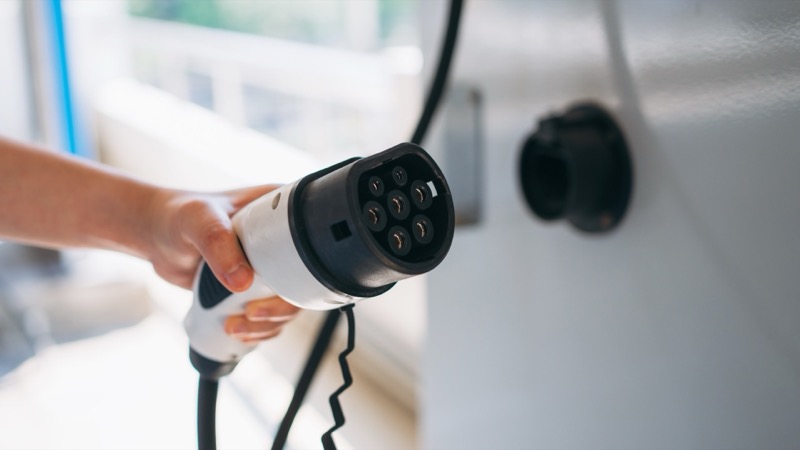
Step 5: Make the Electrical Connections
Strip the wire ends and connect them inside the charger's junction box:
- Black wire to Line 1 (L1) terminal
- White wire to Line 2 (L2) terminal
- Green or bare copper wire to the ground terminal
Tighten all terminal screws to the torque specified in the charger's manual (usually 25–35 inch-pounds). Loose connections are a leading cause of electrical fires. Back at the panel, connect the hot wires to the new breaker and the ground wire to the ground bus bar.
Step 6: Test the Installation
With all covers back in place, turn on the main breaker, then flip the new EV circuit breaker to ON. The charger should power up and display its status indicator. Before plugging in your vehicle:
- Use a voltage tester at the charger to confirm 240V between the two hot conductors.
- Check for 120V between each hot conductor and ground.
- Verify the charger's self-test completes without error codes.
- Plug in your EV and confirm charging begins.
Step 7: Schedule the Inspection
If your jurisdiction requires a permit (most do), schedule the final electrical inspection. The inspector will verify proper wire gauge, breaker size, grounding, and code-compliant installation. Do not close up any walls or ceilings until the inspection is complete.
For a visual reference on what to expect, the U.S. Department of Energy's EVSE installation guide provides additional diagrams and best practices.
Installation Cost Breakdown by Type
Installation costs vary dramatically depending on your home's electrical setup and where the charger will be located. Here is a detailed breakdown of what to expect for each common scenario.
Scenario 1: Simple Garage Installation (Panel in Garage)
This is the cheapest and most straightforward installation. The electrical panel is in the attached garage, and the charger mounts within 10–15 feet.
| Item | Cost Range |
|---|---|
| Level 2 Charger | $250–$600 |
| Breaker + Wire + Materials | $75–$150 |
| Electrician Labor (2–3 hours) | $300–$600 |
| Permit | $50–$150 |
| Total | $675–$1,500 |
Scenario 2: Interior Panel, Exterior Charger (Attached Garage)
The panel is inside the house (basement, utility room), and the charger is in an attached garage. The wire run goes through walls, possibly through an attic or crawlspace.
| Item | Cost Range |
|---|---|
| Level 2 Charger | $250–$600 |
| Materials (longer wire run, conduit) | $150–$400 |
| Electrician Labor (4–6 hours) | $600–$1,200 |
| Permit | $50–$150 |
| Total | $1,050–$2,350 |
Scenario 3: Detached Garage or Outdoor Installation
This is the most expensive scenario. It typically requires trenching for underground conduit between the house and detached garage, plus outdoor-rated equipment.
| Item | Cost Range |
|---|---|
| Level 2 Charger (NEMA 4 rated) | $300–$700 |
| Materials (underground conduit, wire, fittings) | $300–$800 |
| Trenching (20–50 feet) | $300–$1,500 |
| Electrician Labor (6–10 hours) | $900–$2,000 |
| Permit | $75–$200 |
| Total | $1,875–$5,200 |
Scenario 4: Panel Upgrade Required
If your home has a 100-amp or 60-amp panel that cannot accommodate the additional EV load, a panel upgrade is necessary. This is a significant project on its own.
| Item | Cost Range |
|---|---|
| Panel Upgrade (to 200A) | $1,500–$4,000 |
| Level 2 Charger | $250–$600 |
| EV Circuit Materials | $75–$300 |
| Electrician Labor (full day) | $800–$1,500 |
| Permits (panel + EVSE) | $100–$300 |
| Total | $2,725–$6,700 |
Money-Saving Alternatives
If the costs above seem steep, consider these alternatives:
- NEMA 14-50 outlet instead of hardwired: A plug-in setup can save $100–$300 on installation and gives you flexibility to take the charger with you if you move. See our best portable EV chargers guide.
- Load-management device: Products like the DCC-9 or Emporia Smart Circuit Breaker let you share capacity with other appliances, potentially avoiding a panel upgrade. These cost $200–$400 installed.
- 240V smart splitter: If you have an existing 240V outlet (e.g., for a dryer) near your parking spot, a smart splitter like the NeoCharge can share that circuit safely for about $300.
- Federal tax credit: The Alternative Fuel Vehicle Refueling Equipment Tax Credit (Section 30C) can cover up to 30% of installation costs (up to $1,000 for residential). Check energy.gov for current eligibility.
Use our EV charging cost calculator to estimate your ongoing charging costs once the installation is complete.
Permits and Electrical Code Requirements
Electrical permits are required in most U.S. jurisdictions for installing a 240-volt EV charging circuit. Skipping the permit may seem tempting to save money, but it creates serious problems: voided homeowner's insurance, failed home inspections when selling, and potential safety hazards from uninspected work.
NEC Article 625: The EV Charging Code
The National Electrical Code (NEC) Article 625 specifically governs Electric Vehicle Supply Equipment (EVSE). Here are the key requirements as of the 2023 NEC (adopted by most jurisdictions by 2025–2026):
- NEC 625.40 – Branch Circuit Rating: The branch circuit must be rated at 125% of the maximum load of the EVSE for continuous loads. A 32-amp charger requires a 40-amp circuit. A 40-amp charger requires a 50-amp circuit.
- NEC 625.42 – Wiring Methods: All standard NEC wiring methods are permitted. This includes NM cable (Romex), AC cable, MC cable, and conduit with individual conductors.
- NEC 625.44 – Equipment Connection: EVSE can be cord-and-plug connected (using a NEMA 14-50 or 6-50 outlet) or permanently connected (hardwired). Both methods are code-compliant.
- NEC 625.48 – Interactive Systems: If your EVSE communicates with a home energy management system (common in smart chargers), it must comply with NEC 705 for interconnected power systems.
- NEC 625.50 – Location: EVSE installed in residential garages must be installed at a height that prevents physical damage and must not block egress. The NEC does not specify an exact height, but most manufacturers recommend 42–48 inches.
The Permit Process
Here is what to expect when pulling a permit for an EV charger installation:
- Application: Visit your city or county building department (many now accept online applications). You will need to describe the work, specify the charger amperage, and provide your panel information.
- Plan review: Some jurisdictions require a simple site plan showing the panel location, wire route, and charger location. Others accept a verbal description for simple installations.
- Approval: Typically 1–5 business days. Some jurisdictions offer same-day or over-the-counter permits for straightforward EVSE installations.
- Installation: Complete the work according to the approved plan.
- Inspection: Schedule the final inspection. The inspector will verify wire gauge, breaker size, grounding, GFCI protection (if required), and proper installation of the EVSE. Most inspections take 15–30 minutes.
GFCI Protection Requirements
The 2023 NEC introduced expanded GFCI requirements. For EV charger installations:
- Most modern Level 2 EVSE units have built-in GFCI protection, which satisfies the code requirement.
- If your EVSE does not have built-in GFCI, you may need a GFCI-protected breaker, which adds $50–$100 to your materials cost.
- Outdoor installations always require GFCI protection regardless of the EVSE's built-in features in some jurisdictions.
State and Local Variations
While the NEC is the baseline, each state and municipality can adopt amendments. Some common variations:
- California: Requires "EV-ready" wiring in new construction (CALGreen Code). Existing homes follow standard NEC 625.
- New York: NYC has additional requirements for multi-family buildings. Single-family homes follow NEC with NYC amendments.
- Texas: Generally follows NEC without significant amendments. Permit requirements vary widely by city.
- Florida: Requires hurricane-rated conduit for outdoor installations in coastal areas.
Always check with your local building department before starting work. A quick phone call can save you from costly rework.
Common Installation Mistakes to Avoid
After reviewing hundreds of EV charger installations (and the problems that arise from them), these are the most common mistakes homeowners and even some electricians make.
Mistake 1: Undersized Wire
This is the most dangerous mistake. Using 10 AWG wire on a 40-amp circuit will cause the wire to overheat, potentially starting a fire. The NEC is very specific about wire gauge requirements:
- 30-amp circuit: 10 AWG minimum
- 40-amp circuit: 8 AWG minimum
- 50-amp circuit: 6 AWG minimum
- 60-amp circuit: 4 AWG minimum
For long runs (over 50 feet), you may need to upsize the wire by one gauge to account for voltage drop. A 3% voltage drop is the maximum recommended by the NEC for branch circuits.
Mistake 2: No Dedicated Circuit
An EV charger must have its own dedicated circuit. Do not share a circuit with other outlets, lights, or appliances. This is not just a code requirement—it is a safety necessity. EV chargers draw continuous high amperage for hours at a time, and sharing a circuit will trip the breaker at best or overheat the wiring at worst.
Mistake 3: Skipping the Permit
We mentioned this above, but it bears repeating. Unpermitted electrical work can:
- Void your homeowner's insurance if a fire occurs
- Create problems when selling your home (buyers' inspectors will flag it)
- Result in fines if discovered by the building department
- Miss safety issues that an inspector would catch
The permit typically costs $50–$200. It is one of the cheapest parts of the project and provides real protection.
Mistake 4: Mounting the Charger Too Low
Mounting the charger at a height where it could be struck by a car bumper is both a code concern and a practical one. Mount the charger at least 42 inches from the floor, and consider the swing path of your car doors. A damaged charger is an expensive replacement.
Mistake 5: Ignoring Future Needs
If you currently have one EV but plan to get a second, think ahead. It is much cheaper to run two circuits (or install a dual-charger setup) during the initial installation than to call the electrician back later. Similarly, if you have a 100-amp panel and are borderline on capacity, upgrading to 200 amps now will save you the cost of a second service call when you inevitably need more capacity.
Mistake 6: Choosing the Wrong Outlet Type
If you are installing a plug-in charger, make sure you use the correct outlet:
- NEMA 14-50: The most common choice. Four prongs (two hot, one neutral, one ground). Used by the majority of plug-in EV chargers.
- NEMA 6-50: Three prongs (two hot, one ground). Some chargers use this, and it is actually a slightly better choice since EV chargers do not use the neutral conductor. However, fewer replacement outlets are available.
- NEMA 14-30 (dryer outlet): Do NOT use an adapter to plug an EV charger into a standard dryer outlet. The 30-amp circuit is insufficient for most Level 2 chargers, and adapters are a fire hazard.
Mistake 7: Not Testing Before Closing Walls
If your installation involves running wire through walls, test the circuit before patching drywall. It is far cheaper to fix a wiring issue when the walls are open than to tear them open again after the fact. Run the charger for at least 30 minutes and check all connections for warmth with an infrared thermometer. Connections should not exceed 140°F (60°C) under load.
Ready to find the right charger for your installation? Check out our best EV chargers under $300 for budget-friendly options that do not skimp on quality or safety.
Recommended Products
As an Amazon Associate, we earn from qualifying purchases at no extra cost to you. Learn more
Grizzl-E Classic 40A
Grizzl-E
The most durable home EV charger on the market. NEMA 4X aluminum enclosure rated from -30°F to 122°F. Adjustable amperage (16/24/32/40A). Designed and tested in Canada for extreme weather reliability.
Emporia Smart Level 2 48A
Emporia
Best value smart charger on the market. 48A output with WiFi, energy monitoring, TOU scheduling, and solar integration. ENERGY STAR certified. Pairs with Emporia Vue for whole-home energy tracking.
Related Articles & Tools
Frequently Asked Questions
How much does it cost to install an EV charger at home?
The total cost to install a Level 2 EV charger at home ranges from $675 to $2,500 for most installations, including the charger itself. A simple garage installation with the panel nearby costs $675–$1,500. If a panel upgrade is needed, costs can reach $3,000–$6,700. You can significantly reduce costs by choosing a budget-friendly charger under $300 and taking advantage of federal and state rebates.
Can I install an EV charger myself?
Yes, in many jurisdictions homeowners are allowed to install their own EV charging equipment, provided they pull the required permit and pass inspection. The simplest DIY option is a plug-in charger with a NEMA 14-50 outlet—if the outlet already exists, you just plug it in. However, if the work involves your main electrical panel, long wire runs, or outdoor conduit, we strongly recommend hiring a licensed electrician. See our best portable EV chargers for plug-and-play options.
Do I need a permit to install an EV charger at home?
In most U.S. cities and counties, yes—an electrical permit is required for installing a new 240-volt circuit. The permit typically costs $50–$200 and includes a final inspection to verify the work meets code. Some jurisdictions have streamlined the process for standard EVSE installations, offering same-day or over-the-counter permits. Check with your local building department before starting work.
What size breaker do I need for an EV charger?
The breaker must be rated at 125% of the charger's maximum continuous load per NEC 625.40. For a 32-amp charger, you need a 40-amp breaker. For a 40-amp charger, you need a 50-amp breaker. Most homeowners find that a 40-amp breaker with a 32-amp charger is the best balance of cost and charging speed. Use our EV charging time calculator to see how different amperage levels affect your charge time.
How long does it take to install a home EV charger?
A straightforward installation by a licensed electrician takes 2–4 hours. More complex jobs involving long wire runs, outdoor conduit, or panel upgrades can take a full day or even two days. The permit and inspection process adds 1–2 weeks of calendar time, though the actual inspection only takes 15–30 minutes. To learn more about charging speeds once installed, read our guide on Level 1 vs Level 2 charging.
Should I hardwire my EV charger or use a plug-in setup?
Plug-in installations (NEMA 14-50 outlet) are best if you rent, may move, or want DIY flexibility. Hardwired setups support higher amperage (up to 60A) and offer a cleaner look. For most homeowners, a plug-in charger on a NEMA 14-50 outlet is the most practical choice. Read our detailed hardwired vs plug-in comparison for the full breakdown.
Are there tax credits available for EV charger installation?
Yes. The federal Section 30C tax credit covers 30% of the total cost of your charger and installation, up to $1,000 for residential properties. This includes equipment, labor, materials, and permit fees. Many states and utilities offer additional rebates worth $200–$500. See our complete EV charger tax credits and rebates guide for details.
What are the most common EV charger installation mistakes?
The top mistakes include undersizing the breaker (using a 40A breaker for a 40A charger instead of 50A), skipping the permit, using incorrect wire gauge, and installing too far from the electrical panel without compensating for voltage drop. These errors can create safety hazards and code violations. Read our 8 biggest installation mistakes guide to avoid costly problems.
CheapEVCharger Editorial Team
Independent EV charging editorial team. We compare home chargers based on manufacturer specifications, verified Amazon customer reviews, and real-time pricing data — never influenced by manufacturers.
Data sources: Product specifications from manufacturer websites, pricing and customer reviews from Amazon.com and Amazon.de, installation costs from industry reports, electricity rates from U.S. EIA and DOE.
Enjoyed this article?
Practical EV home-charging tips, honest charger picks, and NACS-transition updates — straight to your inbox.
No spam. Unsubscribe anytime.