
How Much Does It Cost to Charge an EV at Home?
One of the biggest advantages of owning an electric vehicle is the dramatic reduction in fuel costs. But how much does it actually cost to charge an EV at home? The answer depends on your electricity rate, your vehicle's efficiency, and how you charge.
On average, charging an EV at home costs between $30 and $60 per month—the equivalent of paying about $1.20 per gallon for gas. That is 3–5 times cheaper than fueling a comparable gas car. In this guide, we break down the exact costs by vehicle model, state electricity rates, and charging method, plus share practical tips to cut your charging bill even further.
Prices, availability, and program terms are subject to change. Last verified: March 18, 2026. We strive for accuracy but recommend verifying details before purchase.
Average Cost to Charge an EV at Home
The cost to charge an EV at home comes down to a simple formula:
Charging Cost = (Battery Size in kWh) × (Electricity Rate per kWh) ÷ (Charging Efficiency)
Let us break that down with real numbers. The average U.S. residential electricity rate in 2026 is approximately $0.16 per kWh. Charging efficiency for a Level 2 home charger is about 90% (meaning 10% of the energy is lost as heat during charging). Here is what a full charge costs for common battery sizes:
| Battery Size | Usable kWh | Cost per Full Charge | Typical Range | Cost per Mile |
|---|---|---|---|---|
| Small (40 kWh) | 38 kWh | $6.76 | ~150 miles | $0.045 |
| Medium (60 kWh) | 57 kWh | $10.13 | ~230 miles | $0.044 |
| Standard (75 kWh) | 71 kWh | $12.62 | ~290 miles | $0.044 |
| Large (100 kWh) | 95 kWh | $16.89 | ~350 miles | $0.048 |
Monthly Charging Costs
The average American drives about 1,124 miles per month (13,500 miles per year). For an EV averaging 3.5 miles per kWh (a typical mid-size EV), that works out to:
- Monthly energy needed: 1,124 ÷ 3.5 = 321 kWh
- Accounting for charging losses (90% efficiency): 321 ÷ 0.9 = 357 kWh
- Monthly cost at $0.16/kWh: 357 × $0.16 = $57.12
Compare this to the average gas car getting 27 MPG at $3.50/gallon:
- Monthly gas cost: 1,124 ÷ 27 × $3.50 = $145.70
That is a savings of $88.58 per month or over $1,060 per year just on fuel. Use our EV vs gas savings calculator to see your personalized savings based on your exact driving habits and local rates.
The Cost-Per-Mile Advantage
One of the most useful metrics is cost per mile. Here is how EVs compare to gas vehicles:
| Vehicle Type | Fuel Cost | Efficiency | Cost per Mile |
|---|---|---|---|
| EV (home charging) | $0.16/kWh | 3.5 mi/kWh | $0.051 |
| EV (public L2) | $0.30/kWh | 3.5 mi/kWh | $0.095 |
| EV (DC fast charging) | $0.45/kWh | 3.5 mi/kWh | $0.143 |
| Gas car (27 MPG) | $3.50/gal | 27 mi/gal | $0.130 |
| Gas car (35 MPG) | $3.50/gal | 35 mi/gal | $0.100 |
| Hybrid (50 MPG) | $3.50/gal | 50 mi/gal | $0.070 |
Home charging is the clear winner at about 5 cents per mile. Even the most efficient hybrid cannot match home EV charging costs. This is why having a Level 2 home charger is such a strong financial decision—see our best cheap Level 2 chargers for affordable options.
Cost by Vehicle Model
Not all EVs are created equal when it comes to charging costs. A compact EV like the Nissan Leaf costs significantly less to charge per month than a large SUV like the Rivian R1S. Here is a detailed comparison of popular 2025–2026 models, calculated at the national average electricity rate of $0.16/kWh with 90% charging efficiency.
| Vehicle | Battery (kWh) | EPA Range | Efficiency (mi/kWh) | Cost per Full Charge | Monthly Cost* | Annual Cost* |
|---|---|---|---|---|---|---|
| Nissan Leaf (40 kWh) | 40 | 149 mi | 3.7 | $7.11 | $43.71 | $524 |
| Chevrolet Equinox EV | 85 | 319 mi | 3.8 | $15.11 | $42.55 | $511 |
| Tesla Model 3 LR | 75 | 341 mi | 4.2 | $13.33 | $38.44 | $461 |
| Tesla Model Y LR | 75 | 310 mi | 3.8 | $13.33 | $42.55 | $511 |
| Hyundai Ioniq 6 | 77 | 361 mi | 4.5 | $13.69 | $35.88 | $431 |
| Ford Mustang Mach-E | 91 | 312 mi | 3.4 | $16.18 | $47.53 | $570 |
| Hyundai Ioniq 5 | 77 | 303 mi | 3.6 | $13.69 | $44.87 | $538 |
| Kia EV6 | 77 | 310 mi | 3.8 | $13.69 | $42.55 | $511 |
| BMW iX xDrive50 | 105 | 324 mi | 3.0 | $18.67 | $53.87 | $646 |
| Rivian R1S | 135 | 321 mi | 2.5 | $24.00 | $64.64 | $776 |
| Mercedes EQS 450+ | 108 | 350 mi | 3.3 | $19.20 | $48.97 | $588 |
| Chevrolet Bolt EUV | 65 | 247 mi | 3.8 | $11.56 | $42.55 | $511 |
*Monthly and annual costs based on 1,124 miles/month (13,500 miles/year) national average driving distance.
Key Takeaways from the Data
- Most efficient: The Hyundai Ioniq 6 leads the pack at 4.5 mi/kWh, costing just $431 per year to charge. Its aerodynamic sedan design pays real dividends in energy efficiency.
- Tesla Model 3 remains one of the most efficient and cheapest to charge at $461/year, thanks to its 4.2 mi/kWh efficiency.
- Larger vehicles cost more: The Rivian R1S, while a capable SUV, costs nearly $776/year to charge—still far less than the $2,250+ you would spend on gas for a comparable gas SUV.
- Battery size is not everything: The Chevy Equinox EV has a large 85 kWh battery but its good efficiency (3.8 mi/kWh) keeps monthly costs reasonable at $42.55.
Want to calculate costs for your specific vehicle? Our EV charging cost calculator lets you input your exact model, electricity rate, and driving distance for a personalized estimate.
Electricity Rates by State
Your electricity rate is the single biggest factor in your home charging costs. Rates vary dramatically across the United States, from under $0.10/kWh in some states to over $0.30/kWh in others. Here are the average residential electricity rates for the most populous states as of early 2026:
| State | Avg Rate ($/kWh) | Monthly EV Cost* | Annual EV Cost* | Annual Gas Cost** | Annual Savings |
|---|---|---|---|---|---|
| Louisiana | $0.098 | $35.01 | $420 | $1,750 | $1,330 |
| Idaho | $0.102 | $36.44 | $437 | $1,750 | $1,313 |
| Washington | $0.108 | $38.59 | $463 | $1,900 | $1,437 |
| Utah | $0.112 | $40.02 | $480 | $1,700 | $1,220 |
| Texas | $0.133 | $47.52 | $570 | $1,650 | $1,080 |
| Florida | $0.142 | $50.74 | $609 | $1,700 | $1,091 |
| Ohio | $0.143 | $51.10 | $613 | $1,680 | $1,067 |
| Colorado | $0.147 | $52.53 | $630 | $1,720 | $1,090 |
| Illinois | $0.155 | $55.39 | $665 | $1,800 | $1,135 |
| Pennsylvania | $0.163 | $58.25 | $699 | $1,780 | $1,081 |
| New York | $0.204 | $72.91 | $875 | $1,950 | $1,075 |
| New Jersey | $0.178 | $63.61 | $763 | $1,820 | $1,057 |
| California | $0.271 | $96.85 | $1,162 | $2,400 | $1,238 |
| Connecticut | $0.258 | $92.21 | $1,107 | $1,900 | $793 |
| Massachusetts | $0.262 | $93.64 | $1,124 | $1,920 | $796 |
| Hawaii | $0.387 | $138.31 | $1,660 | $2,600 | $940 |
*Based on average EV efficiency of 3.5 mi/kWh, 13,500 miles/year, 90% charging efficiency.
**Based on 27 MPG average and state-specific gas prices.
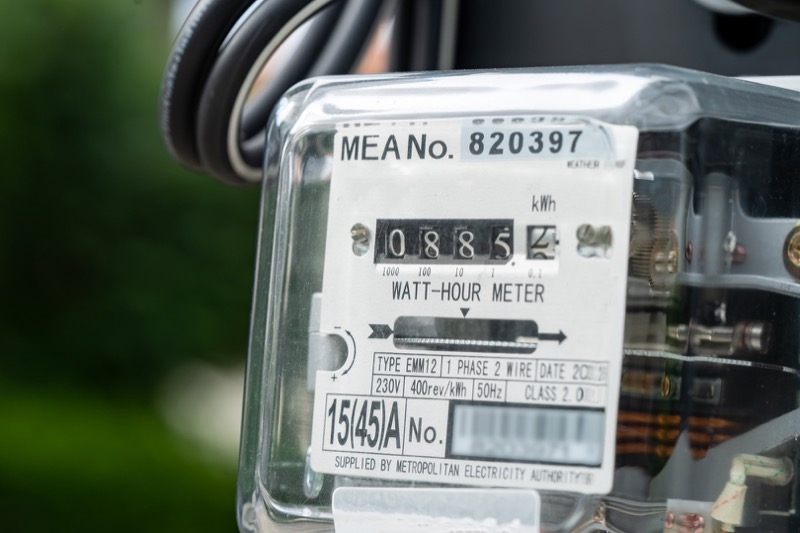
What This Means for You
Even in the most expensive electricity states like Hawaii and California, EV owners still save $800–$1,200 per year compared to gas. In cheap-electricity states like Louisiana and Idaho, savings can exceed $1,300 per year.
The most important thing you can do to reduce your rate is enroll in a time-of-use (TOU) electricity plan if your utility offers one. TOU plans offer discounted off-peak rates (often 30–50% cheaper) during nighttime hours when you would be charging anyway. In California, for example, off-peak rates can drop from $0.27 to $0.15–$0.18/kWh, saving you $30+ per month.
Learn more about optimizing your charging schedule in our guide on the best time to charge your electric car.
Home Charging vs Public Charging Costs
Not all charging is equal in cost. Where you charge has a massive impact on your total expenses. Let us compare the three main charging scenarios.
Cost Comparison: All Charging Methods
| Charging Method | Typical Rate | Cost per 100 Miles | Monthly Cost (1,124 mi) | Annual Cost (13,500 mi) |
|---|---|---|---|---|
| Home Level 1 (120V) | $0.16/kWh | $5.07 | $57 | $684 |
| Home Level 2 (240V) | $0.16/kWh | $5.07 | $57 | $684 |
| Home Level 2 (off-peak TOU) | $0.09/kWh | $2.86 | $32 | $386 |
| Public Level 2 (per kWh) | $0.25–$0.35/kWh | $8.57 | $96 | $1,157 |
| Public Level 2 (per hour) | $1.50–$3.00/hr | $10–$20 | $112–$225 | $1,350–$2,700 |
| DC Fast Charging | $0.35–$0.60/kWh | $14.29 | $161 | $1,929 |
| Tesla Supercharger | $0.35–$0.50/kWh | $12.14 | $137 | $1,639 |
| Gasoline (27 MPG, $3.50/gal) | $3.50/gal | $12.96 | $146 | $1,750 |
Key Insights
Home Level 1 and Level 2 cost the same per kWh. The difference is speed, not price. Level 1 adds 3–5 miles of range per hour, while Level 2 adds 18–40 miles per hour. The electricity rate is identical because it comes from the same meter. However, Level 2 chargers are slightly more efficient (about 90% vs 85% for Level 1), so you actually save a small amount with Level 2 over the long term.
Off-peak home charging is the cheapest option by far. If you can access TOU rates and charge during off-peak hours (typically 9 PM to 6 AM), you can cut your charging costs by 40–50%. At $0.09/kWh, you are looking at just $32/month or $386/year. That is roughly equivalent to paying $0.80 per gallon of gas.
Public Level 2 charging costs 2–3x more than home charging. Public chargers have overhead costs (equipment, installation, network fees, real estate) that are passed on to drivers. Per-hour billing at public stations is especially expensive because you are paying even when your car's charge rate slows down above 80%.
DC fast charging approaches or exceeds gas prices. At $0.45/kWh average, DC fast charging costs about $12–$14 per 100 miles—comparable to a fuel-efficient gas car. It is convenient for road trips but should not be your primary charging method if cost savings are a priority.
The Real-World Mix
Most EV owners do about 80% of their charging at home and 20% at public stations (mostly during road trips or errands). With this mix, here is what annual costs look like:
- 80% home ($0.16/kWh) + 20% public L2 ($0.30/kWh): ~$778/year
- 80% home off-peak ($0.09/kWh) + 20% DC fast ($0.45/kWh): ~$695/year
- 100% home off-peak: ~$386/year
- 100% DC fast charging: ~$1,929/year
The takeaway is clear: a home Level 2 charger pays for itself within the first year compared to relying on public charging. Check our best cheap Level 2 EV chargers to find one that fits your budget.
Tips to Reduce Your Charging Bill
Even though home EV charging is already cheap, there are several strategies to cut your costs even further. Some of these tips can reduce your charging bill by 30–50%.
1. Switch to a Time-of-Use (TOU) Electricity Plan
This is the single most impactful thing you can do. TOU plans offer discounted rates during off-peak hours (typically nights and weekends). The savings are dramatic:
- Standard rate: $0.16/kWh → $57/month
- TOU off-peak rate: $0.09/kWh → $32/month
- Annual savings: ~$300
Most utilities now offer TOU plans, and many have EV-specific rate plans that offer even deeper off-peak discounts. Contact your utility company or check their website to see what is available. A smart charger with scheduling capability makes this effortless—set it once and the charger automatically starts during the cheapest hours every night.
2. Use a Smart Charger with Scheduling
A smart charger with built-in scheduling is essential for taking advantage of TOU rates. You plug in when you get home, but charging does not start until the off-peak window. Top options include:
- Chargers with built-in WiFi and app-based scheduling
- Tesla Wall Connector (scheduling built into the Tesla app)
- Any charger paired with a smart plug (budget option for basic scheduling)
Many cars also have built-in charge scheduling, but using the charger's schedule is more reliable since it does not depend on the car's software. See our best cheap Level 2 chargers list—most options under $400 now include scheduling.
3. Install Solar Panels
If you have rooftop solar, your marginal cost of electricity can drop to nearly $0.00/kWh for EV charging. Even without a battery storage system, if you work from home or can charge during daytime solar production hours, you are essentially fueling your car for free.
The math is compelling: a 7 kW solar array generates about 30 kWh per day in a sunny state. That is enough to drive about 105 miles per day—far more than the average daily drive of 37 miles. The system costs $15,000–$20,000 before incentives, but the 30% federal solar tax credit reduces that significantly.
4. Charge to 80% for Daily Use
Most EV manufacturers recommend charging to 80% for daily use rather than 100%. This is primarily for battery longevity, but it also saves money in a subtle way: the last 20% of charging is slower and less efficient due to the battery management system's taper curve. By stopping at 80%, you maintain higher charging efficiency throughout the session.
For most drivers, 80% of a standard EV battery provides 200+ miles of range—more than enough for several days of average driving.
5. Monitor Your Energy Usage
What gets measured gets managed. Use one of these tools to track your actual charging costs:
- Smart charger app: Most WiFi-connected chargers track energy consumption per session and over time.
- Dedicated energy monitor: Devices like the Emporia Vue or Sense monitor can track your EV circuit specifically.
- Your car's built-in data: Most EVs report energy consumed per trip and over time.
- Our EV charging cost calculator: Input your rates and driving habits for a personalized monthly and annual estimate.
By monitoring, you can identify if your actual costs match your estimates and adjust your habits accordingly. Some drivers discover they are charging more than necessary, or that their TOU plan's off-peak window does not align with their charger's schedule.
6. Take Advantage of Free Charging
Free charging opportunities are more common than you might think:
- Workplace charging: Many employers now offer free Level 2 charging as a benefit.
- Retail locations: Stores like Whole Foods, Target, and many hotels offer free charging to attract customers.
- Promotional offers: Some automakers include free charging credits with a new vehicle purchase (e.g., certain Ford and Hyundai models).
- Municipal stations: Some cities operate free public Level 2 chargers, especially near government buildings and libraries.
While you should not rely on free charging as your primary strategy, taking advantage of it when convenient can shave $10–$30 off your monthly bill.
7. Drive Efficiently
Your driving style directly impacts charging costs. Aggressive acceleration, high speeds, and excessive climate control use all reduce your miles-per-kWh efficiency. Simple changes can improve efficiency by 10–20%:
- Use regenerative braking aggressively (one-pedal driving)
- Keep speeds at or below 65 MPH on highways (aerodynamic drag increases exponentially with speed)
- Pre-condition the cabin while plugged in (uses grid power instead of battery)
- Maintain proper tire pressure (underinflated tires increase rolling resistance)
A 15% improvement in efficiency on a $57/month charging bill saves you about $100 per year—small but meaningful, and it also extends your range between charges.
Recommended Products
As an Amazon Associate, we earn from qualifying purchases at no extra cost to you. Learn more

Emporia Smart Level 2 48A
Emporia
Best value smart charger on the market. 48A output with WiFi, energy monitoring, TOU scheduling, and solar integration. ENERGY STAR certified. Pairs with Emporia Vue for whole-home energy tracking.
Lectron V-Box 48A
Lectron
Our top-rated budget Level 2 charger. Delivers 48A (11.5 kW) for the fastest home charging at this price. Built-in GFCI, NEMA 4 enclosure, and 24-foot cable. No WiFi — zero connectivity issues.
Related Articles & Tools
Frequently Asked Questions
How much does it cost to fully charge an electric car at home?
The cost to fully charge an EV at home ranges from $7 to $24, depending on your battery size and electricity rate. For example, a Tesla Model 3 with a 75 kWh battery costs about $13.33 for a full charge at the national average rate of $0.16/kWh. A smaller Nissan Leaf (40 kWh) costs about $7.11. Use our EV charging cost calculator for your exact vehicle and rate.
Is it cheaper to charge an EV at home or at a public station?
Home charging is significantly cheaper. At the national average of $0.16/kWh, home charging costs about $5 per 100 miles. Public Level 2 chargers average $0.25–$0.35/kWh ($8–$10 per 100 miles), and DC fast chargers average $0.35–$0.60/kWh ($12–$17 per 100 miles). Investing in a Level 2 home charger typically pays for itself within the first year of ownership.
How much does EV charging add to your electric bill?
For the average driver (1,124 miles/month), home EV charging adds approximately $30 to $60 per month to your electric bill at typical U.S. rates. In states with cheap electricity like Louisiana ($0.098/kWh), it can be as low as $35/month. In expensive states like California ($0.271/kWh), it can reach $97/month. Charging during off-peak hours can reduce this by 30–50%.
Is it cheaper to charge an EV than to buy gas?
Yes, significantly. The average EV costs about $0.05 per mile to drive on home electricity, compared to $0.13 per mile for a gas car averaging 27 MPG at $3.50/gallon. That translates to savings of roughly $1,000–$1,300 per year for the average driver. Use our EV vs gas savings calculator to see your personalized savings.
Does Level 1 or Level 2 charging cost more?
The electricity cost per kWh is the same for Level 1 and Level 2 charging since both use your home's electrical meter. However, Level 2 chargers are slightly more energy-efficient (about 90% vs 85% for Level 1), meaning you waste less energy as heat. Over a year, this efficiency difference saves about $30–$50. The real advantage of Level 2 is speed: 25–40 miles of range per hour vs 3–5 miles for Level 1. Learn more in our Level 1 vs Level 2 charging comparison.
How can I reduce my EV charging costs?
The most effective strategies are: 1) Switch to a time-of-use (TOU) electricity plan and charge during off-peak hours (saves 30-50%). 2) Install solar panels to charge from free sunlight. 3) Take advantage of free public charging at shopping centers and workplaces. 4) Set your charge limit to 80% for daily use (more efficient than 100%). See our best time to charge guide for detailed savings strategies.
Does cold weather increase EV charging costs?
Yes, indirectly. Cold weather reduces battery efficiency by 20-40%, meaning you use more kWh per mile driven. This translates to roughly $10-$25 more per month in winter versus summer for the average driver. Preconditioning the battery while plugged in and parking in a garage can reduce this penalty significantly. Read our cold weather charging guide for tips.
How do EV charging costs compare to public DC fast charging?
Home charging at $0.16/kWh costs about $5 per 100 miles. Public DC fast charging at $0.35-$0.60/kWh costs $12-$17 per 100 miles — roughly 2.5-3.5x more expensive. Over 12,000 miles per year, home charging saves $500-$1,200 compared to relying on public fast charging. Investing in a $200-$300 home charger pays for itself within 3-6 months.
CheapEVCharger Editorial Team
Independent EV charging editorial team. We compare home chargers based on manufacturer specifications, verified Amazon customer reviews, and real-time pricing data — never influenced by manufacturers.
Data sources: Product specifications from manufacturer websites, pricing and customer reviews from Amazon.com and Amazon.de, installation costs from industry reports, electricity rates from U.S. EIA and DOE.
Enjoyed this article?
Practical EV home-charging tips, honest charger picks, and NACS-transition updates — straight to your inbox.
No spam. Unsubscribe anytime.