
NACS vs J1772: The Complete EV Connector Guide for 2026
Quick answer: NACS (SAE J3400), Tesla's connector, is replacing J1772 as the standard EV plug in North America, with Ford, GM, Hyundai, and nearly every automaker adopting it by 2026. For home charging, both connectors deliver identical AC power up to 19.2 kW, and a $30–$50 adapter bridges either direction — so your charging speed never changes.
The EV charging world is in the middle of its biggest shakeup in over a decade. Tesla's proprietary connector — now standardized as NACS (North American Charging Standard) — is rapidly replacing J1772 as the default plug for new electric vehicles in North America. If you are shopping for an EV or a home charger in 2026, you need to understand what this transition means for you.
This guide breaks down both connector types in plain language: their history, technical specs, physical differences, and real-world compatibility. We will cover which cars use which plug, what adapters exist, and how to future-proof your home charging setup without overspending.
Whether you drive a 2019 Chevy Bolt with a J1772 port or a brand-new Ford Mustang Mach-E with NACS, this guide has you covered.
Prices, availability, and program terms are subject to change. Last verified: July 7, 2026. We strive for accuracy but recommend verifying details before purchase.
What Is J1772?
The J1772 connector — formally known as the SAE J1772 standard — has been the default Level 1 and Level 2 charging plug for electric vehicles in North America since 2009. If you have ever charged a non-Tesla EV at a public station or used a home charger from any major brand, you have almost certainly used a J1772 plug.
A Brief History
The J1772 standard was originally developed by the Society of Automotive Engineers (SAE) and first introduced by Yazaki Corporation in collaboration with the California Air Resources Board. The initial version debuted in 2001, but the modern round connector design that most people recognize was adopted in 2009 as part of the SAE J1772-2009 revision.
By 2012, every major non-Tesla automaker in the North American market had adopted J1772 as their standard AC charging connector. This includes GM, Ford, Nissan, BMW, Hyundai, Kia, Volkswagen, and every other brand selling EVs on the continent. It became so universal that "J plug" became shorthand for EV charging in the industry.
Technical Specifications
The J1772 connector uses a 5-pin design:
- L1 (Line 1): AC hot conductor
- L2 (Line 2): AC hot conductor (used for 240V split-phase)
- Ground: Equipment grounding conductor
- Proximity Detection (PP): Tells the vehicle the plug is connected
- Control Pilot (CP): Communication signal between charger and vehicle — negotiates amperage, handles safety checks
The connector supports up to 19.2 kW of AC power delivery (240V at 80A), though most home and public Level 2 chargers operate between 7.2 kW (30A circuit) and 11.5 kW (48A circuit). For Level 1 charging from a standard 120V outlet, J1772 delivers about 1.4 kW — enough to add roughly 4-5 miles of range per hour.
Physically, the J1772 plug is fairly large. The circular connector housing measures approximately 43mm in diameter, and the locking mechanism adds additional bulk. It is a two-handed operation for some drivers — you press a release button on the top of the connector while pulling it out of the vehicle port.
One important limitation: J1772 handles only AC charging. For DC fast charging, North American EVs historically used the CCS1 (Combined Charging System) connector, which is essentially a J1772 plug with two additional DC pins mounted below it. This is relevant because it explains why CCS1 connectors are so physically large — they had to accommodate the J1772 design plus extra DC hardware.
What Is NACS (Tesla Connector)?
The NACS connector — North American Charging Standard — is the plug that Tesla has used on its vehicles since 2012. For over a decade it was simply called the "Tesla connector" or "Tesla plug," but in November 2022, Tesla published the connector specification as an open standard and proposed renaming it to NACS. In June 2023, SAE International officially adopted it as the SAE J3400 standard.
That SAE stamp of approval changed everything. What was once a proprietary Tesla-only plug is now the official industry standard for EV charging in North America.
How Tesla's Connector Became the Standard
Tesla designed its connector in the early 2010s with a fundamentally different philosophy than J1772. While J1772 separated AC and DC charging into different physical connectors (J1772 for AC, CCS1 for DC), Tesla built a single compact plug that handles both AC and DC power through the same pins.
This unified design was possible because Tesla controlled both the vehicle and the charging network. They did not need to satisfy a committee of competing automakers with different technical requirements. The result was a connector that was smaller, lighter, and more elegant than the J1772/CCS1 combination.
The industry shift began in May 2023 when Ford announced it would adopt the Tesla connector for its EVs starting in 2025. GM followed within weeks. By the end of 2023, virtually every major automaker — Rivian, Volvo, Polestar, Honda, Hyundai, Kia, BMW, Mercedes, Volkswagen, Toyota, Nissan, and Stellantis — had announced NACS adoption plans.
Technical Specifications
NACS uses a compact 2-pin design for power delivery, plus a ground pin:
- DC+/AC L1: Shared pin for DC positive or AC Line 1
- DC-/AC L2: Shared pin for DC negative or AC Line 2
- Ground: Equipment grounding conductor
- Proximity Detection: Connection sensing
- Control Pilot: Communication between charger and vehicle
The key engineering insight is those shared power pins. By multiplexing AC and DC over the same conductors, Tesla eliminated the need for the bulky extra DC pins that CCS1 requires. The result is a connector that is roughly 50% smaller and significantly lighter than CCS1.
Power delivery specs are impressive: up to 19.2 kW for AC charging (same as J1772) and up to 1 MW for DC fast charging in the published specification. In practice, Tesla Superchargers currently deliver up to 250 kW, with V4 Superchargers capable of even higher output. The connector itself is not the bottleneck — cable cooling, battery acceptance rate, and grid capacity are the real limiting factors.
Physically, the NACS plug weighs about half as much as a CCS1 connector and can be operated easily with one hand. There is no release button — the locking mechanism is electronic, controlled by the vehicle. Many drivers cite this as a major usability improvement over J1772's manual latch system.
NACS vs J1772: Side-by-Side Comparison
Here is how these two connectors stack up across every metric that matters for EV owners. This comparison covers both the AC charging capabilities (what you use at home and at most public Level 2 stations) and the broader ecosystem differences.
| Feature | J1772 (SAE J1772) | NACS (SAE J3400) |
|---|---|---|
| Standardized | 2009 (SAE J1772-2009) | 2023 (SAE J3400) |
| Power Pins | 2 AC pins | 2 shared AC/DC pins |
| Total Pins | 5 | 5 |
| Max AC Power | 19.2 kW (240V, 80A) | 19.2 kW (240V, 80A) |
| DC Fast Charging | No (requires CCS1 add-on) | Yes, built-in (up to 1 MW spec) |
| Connector Diameter | ~43 mm | ~25 mm |
| Connector Weight | ~600 g (plug only) | ~300 g (plug only) |
| Locking Mechanism | Manual release button | Electronic (vehicle-controlled) |
| One-Handed Operation | Difficult for some users | Yes, easy |
| DC Connector (for fast charging) | CCS1 (J1772 + DC pins) | Same NACS plug |
| New Vehicle Adoption (2026) | Legacy models only | All major automakers |
| Supercharger Network Access | Via adapter only | Native access |
| Home Charger Availability | Universal (all brands) | Growing rapidly (most new models) |
What the Specs Don't Tell You
On paper, AC charging performance is identical. Both connectors deliver the same maximum power for Level 1 and Level 2 charging. If you are charging at home on a 48-amp charger, you will get the same 11.5 kW regardless of connector type. The real differences are in physical usability, DC fast charging integration, and ecosystem access.
The NACS connector's biggest practical advantage is its unified design. With J1772, you need one connector shape for AC charging and a completely different (much larger) CCS1 connector for DC fast charging. NACS uses the same compact plug for everything — Level 1 at a wall outlet, Level 2 at home, and 250 kW+ at a Supercharger. One plug, all speeds.
For home charging specifically, the connector type matters less than you might think. Both work fine. The charging speed is determined by your circuit amperage and your car's onboard charger, not the plug shape. Check our Level 1 vs Level 2 charging guide for a detailed breakdown of charging speeds at different amperages.
Which Cars Use Which Connector?
The transition from J1772 to NACS is happening fast, but it is not instantaneous. Here is where things stand as of early 2026, organized by timeline.
Always Had NACS (Tesla Connector)
Every Tesla vehicle ever sold in North America uses the NACS port:
- Tesla Model S (all years)
- Tesla Model 3 (all years)
- Tesla Model X (all years)
- Tesla Model Y (all years)
- Tesla Cybertruck
- Tesla Semi
If you own a Tesla, you have always been in the NACS ecosystem. Our Tesla home charging guide covers your specific setup options in detail.
Switched to NACS in 2025
These manufacturers began shipping vehicles with NACS ports on some or all 2025 model year vehicles:
- Ford: Mustang Mach-E, F-150 Lightning (2025 refresh and later)
- GM: Chevrolet Equinox EV, Blazer EV, Silverado EV, Cadillac Lyriq (mid-2025 production onwards)
- Rivian: R1T, R1S (2025 models), R2 (launched with NACS)
- Volvo/Polestar: EX30, EX90, Polestar 2 (2025 refresh), Polestar 4
- Hyundai: Ioniq 5 (2025 refresh), Ioniq 6 (2025 refresh)
- Kia: EV6 (2025 refresh), EV9 (2025 refresh)
- Nissan: Ariya (2025 update)
Switching to NACS in 2026
Additional models and brands completing their transition:
- BMW: iX, i4, i5 (2026 models)
- Mercedes-Benz: EQS, EQE, EQB (2026 models)
- Volkswagen: ID.4, ID.Buzz (2026 models)
- Toyota: bZ4X (2026 refresh)
- Honda: Prologue (2026 update), Honda 0 series
- Stellantis: Jeep Recon, Ram 1500 REV (launching with NACS)
Still Using J1772/CCS1
Any EV built before the transition still uses J1772 for AC charging and CCS1 for DC fast charging. This includes millions of vehicles on the road today:
- All non-Tesla EVs from model year 2024 and earlier
- Early 2025 production of some models (before NACS switchover at the factory)
- Chinese-market EVs using GB/T connectors (not relevant in North America)
Not sure which connector your car has? Our EV charger compatibility checker can help you verify your vehicle's port type and find compatible chargers.
CCS vs NACS for DC Fast Charging
This is where the connector transition has the most dramatic impact. DC fast charging is what you use on road trips — pulling into a station and adding 100+ miles of range in 20-30 minutes. The connector you have determines which networks you can access natively.
CCS1: The Outgoing Standard
CCS1 (Combined Charging System 1) was the DC fast charging standard for all non-Tesla EVs in North America. It works by combining the J1772 AC connector with two additional high-current DC pins mounted below it, creating a large two-part plug.
CCS1 supports up to 350 kW in theory, though most real-world stations top out at 150-350 kW depending on the network. Electrify America, EVgo, and ChargePoint all deployed CCS1 as their primary DC connector.
The main complaint about CCS1 has always been the connector's size and weight. The combined plug is bulky, heavy, and the cable is stiff — especially in cold weather. Accessibility advocates have raised legitimate concerns about CCS1 being difficult for people with limited hand strength or mobility.
NACS: The New Standard for DC Fast Charging
NACS handles DC fast charging through the same compact plug used for AC charging. No adapter, no second connector shape. You use the same small, lightweight plug whether you are adding 5 miles of range per hour on Level 1 or 200 miles in 15 minutes at a Supercharger.
Tesla's Supercharger network — the largest DC fast charging network in North America with over 30,000 stalls — has begun adding NACS cables alongside existing connectors. New V4 Supercharger stations are being built with longer cables and NACS connectors designed to work with any vehicle, not just Teslas.
Meanwhile, other networks are adding NACS too. Electrify America began deploying NACS connectors at its stations in late 2024. ChargePoint, EVgo, and Blink have all announced NACS rollout plans. By the end of 2026, most major DC fast charging stations in North America will have NACS connectors available.
The Adapter Situation
During the transition period, adapters bridge the gap:
- NACS-to-CCS1 adapter: Lets NACS-equipped vehicles use older CCS1 stations. Most automakers include one with new NACS vehicles.
- CCS1-to-NACS adapter: Lets older CCS1 vehicles use Tesla Superchargers. Tesla and third-party manufacturers sell these. Tesla offers its own adapter for approximately $200 and has enabled Supercharger access for non-Tesla EVs through its app.
- J1772-to-NACS adapter: For Level 2 AC charging only. Lets you use a J1772 home charger with an NACS vehicle (or vice versa). These are simple, inexpensive ($30-$50), and widely available.
Adapters work fine but add a potential failure point and some inconvenience. Native connector access is always preferable when available.
What This Means for Home Charging
If you are buying or upgrading a home EV charger in 2026, the connector transition adds a new decision to the process. Here is how to think about it practically.
Buying a New Home Charger
Most major home charger manufacturers now sell both J1772 and NACS versions of their products, and some offer models with swappable cables or dual-connector designs. Here is the current landscape:
- J1772 models: Still widely available, work with all EVs (NACS vehicles can use a simple $30 adapter)
- NACS models: Growing availability, work natively with Tesla and all new NACS-equipped EVs
- Dual-connector or swappable: Some chargers like the Grizzl-E and Lectron models offer interchangeable cable tips
For most buyers in 2026, here is the decision framework:
- If you have a new NACS-equipped vehicle: Buy an NACS charger. You might own this charger for 10+ years, and NACS is the future.
- If you have an older J1772 vehicle and plan to keep it: Buy a J1772 charger. When you eventually switch to an NACS vehicle, a $30 adapter will bridge the gap.
- If you have two EVs with different connectors: Consider a dual-connector model or buy an NACS charger with a J1772 adapter. If you are charging two vehicles regularly, check out our guide on best affordable Level 2 chargers for options that fit this scenario.
Future-Proofing Your Setup
The most future-proof approach for home charging is to focus on the electrical infrastructure rather than the connector. A properly installed 60-amp circuit with the right wire gauge will serve you for decades, regardless of which plug shape the industry settles on. The charger itself is the replaceable part — the wiring in your walls is the expensive, permanent part.
Install the biggest circuit your panel can support (most people should aim for a 50 or 60-amp circuit). Wire it correctly the first time. Then buy whatever charger matches your current vehicle. If you switch cars in five years, you replace a $300-$600 charger — not your entire electrical setup. See our installation guide for detailed wiring and circuit requirements.
Does Connector Type Affect Charging Speed at Home?
No. At Level 2 home charging speeds, NACS and J1772 deliver identical performance. Both support up to 19.2 kW (80A), and your actual charging speed depends on your circuit amperage and your car's onboard charger capacity — not the connector. A 48-amp NACS charger and a 48-amp J1772 charger will both deliver exactly 11.5 kW to your vehicle.
The connector only makes a performance difference for DC fast charging, which is not relevant for home installations.
What If You Have an Older J1772 Car?
If you drive a pre-2025 non-Tesla EV, your car has a J1772 port for AC charging and a CCS1 port for DC fast charging. The industry's move to NACS does not make your car obsolete, but it does change the landscape in a few important ways.
Home Charging: No Changes Needed
Your J1772 home charger works exactly the same as it always has. Nothing about the industry transition affects your home charging setup. Plug in, charge, done. If you do not have a Level 2 charger yet, J1772 models are still in production and widely available — and they tend to be slightly cheaper than NACS equivalents since the market is more mature.
Browse our best budget Level 2 chargers for current recommendations, and check our brand overview page to compare manufacturers.
Public Level 2 Charging: Mostly Unchanged
Public Level 2 stations (at malls, offices, hotels) will continue to have J1772 connectors for years to come. The installed base is enormous — hundreds of thousands of J1772 Level 2 stations across North America. Even as new stations add NACS, the existing J1772 infrastructure is not going anywhere.
DC Fast Charging: The Bigger Impact
This is where J1772/CCS1 owners may feel the squeeze over time. As charging networks prioritize NACS connectors (especially at new installations), CCS1 may get fewer stalls or slower rollout of new locations. However, federal NEVI funding requires stations to include CCS1 connectors, so government-funded stations will support your car for the foreseeable future.
Tesla Superchargers have also opened to CCS1 vehicles using the Magic Dock adapter or a CCS1-to-NACS adapter at select locations. This is expanding — check the Tesla app for the latest list of compatible stations in your area.
Should You Sell or Trade In?
Not because of the connector alone. Your J1772/CCS1 vehicle will remain fully functional for its entire lifespan. The charging infrastructure is not going to abandon CCS1 overnight — it will coexist with NACS for many years. However, when you do eventually buy your next EV, it will almost certainly have an NACS port. Plan your next home charger purchase accordingly.
Adapter Options for J1772 Owners
If you want to access NACS-only charging stations (which are still rare for Level 2, but may become more common):
- NACS-to-J1772 adapter: Plugs into an NACS station, outputs J1772 for your car. Available from Lectron, Tesla, and other manufacturers for $30-$50. Works for Level 2 AC charging only.
- NACS-to-CCS1 adapter: For DC fast charging at Tesla Superchargers. Available from Tesla for approximately $200. Required for non-NACS vehicles to use the Supercharger network.
Both adapters are compact enough to keep in your glovebox or frunk. They add a slight inconvenience but zero performance penalty.
The Future of EV Connectors
The connector transition happening right now is likely the last major plug change for North American EV owners. Here is why, and what to expect going forward.
NACS Is the Endgame for North America
With SAE standardization, universal automaker adoption, and the federal government accepting NACS for NEVI-funded stations, the question is settled. NACS is the long-term standard for North America. J1772 and CCS1 will continue to function — your car does not expire — but all new infrastructure and vehicles will be built around NACS.
By 2028-2030, expect the vast majority of public charging stations to offer NACS, with CCS1 maintained as legacy support at larger stations. Smaller installations may be NACS-only.
Europe and the Rest of the World
This transition is North America-specific. Europe uses the Type 2 (Mennekes) connector for AC charging and CCS2 for DC fast charging, and there are no plans to change. Tesla vehicles sold in Europe already use the Type 2/CCS2 standard. China uses the GB/T standard, with a newer ChaoJi megawatt-class connector in development.
If you travel internationally with an EV (rare but possible in border areas), the connector standards differ by region.
Megawatt Charging for Commercial Vehicles
For heavy-duty trucks and commercial fleets, the Megawatt Charging System (MCS) is in development — a massive connector capable of delivering over 1 MW for semi trucks that need to charge their 500+ kWh battery packs quickly. This is a separate standard from NACS and will not affect passenger vehicles.
Wireless Charging
Wireless (inductive) charging is making slow progress. SAE J2954 defines a standard for wireless EV charging, and a few automakers (Genesis, BMW) have announced optional wireless charging pads for select models. However, wireless charging currently tops out at about 11 kW — comparable to a mid-range Level 2 charger — and the equipment costs significantly more than a wired setup.
Wireless charging will likely remain a premium convenience feature rather than a replacement for plugged-in charging for the foreseeable future. The practical advice remains the same: invest in good electrical infrastructure and a reliable wired charger.
Recommended Products
As an Amazon Associate, we earn from qualifying purchases at no extra cost to you. Learn more
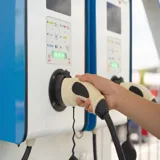
Tesla Wall Connector
Tesla
Tesla official home charger with native NACS connector. 48A output, built-in WiFi for OTA updates, power sharing between up to 6 units, and seamless Tesla app integration. Works with all NACS-equipped EVs.
Lectron V-Box 48A
Lectron
Our top-rated budget Level 2 charger. Delivers 48A (11.5 kW) for the fastest home charging at this price. Built-in GFCI, NEMA 4 enclosure, and 24-foot cable. No WiFi — zero connectivity issues.
Related Articles & Tools
Frequently Asked Questions
Can I use a J1772 charger with a Tesla or other NACS vehicle?
Is J1772 going away completely?
Should I buy a J1772 or NACS home charger in 2026?
What is the difference between NACS and Tesla's old connector?
Do adapters reduce charging speed?
Will CCS1 DC fast charging stations still work with my older EV?
Which automakers have switched to NACS?
How much does a NACS-to-J1772 adapter cost?
CheapEVCharger Editorial Team
Independent EV charging editorial team. We compare home chargers based on manufacturer specifications, verified Amazon customer reviews, and real-time pricing data — never influenced by manufacturers.
Data sources: Product specifications from manufacturer websites, pricing and customer reviews from Amazon.com and Amazon.de, installation costs from industry reports, electricity rates from U.S. EIA and DOE.
Enjoyed this article?
Practical EV home-charging tips, honest charger picks, and NACS-transition updates — straight to your inbox.
No spam. Unsubscribe anytime.